To understand the real state of HVAC marketing in 2026, we surveyed 400 HVAC business owners and operators across the U.S.
Here are our top findings:
- 62% of HVAC businesses spend more than $1,500 per month on marketing
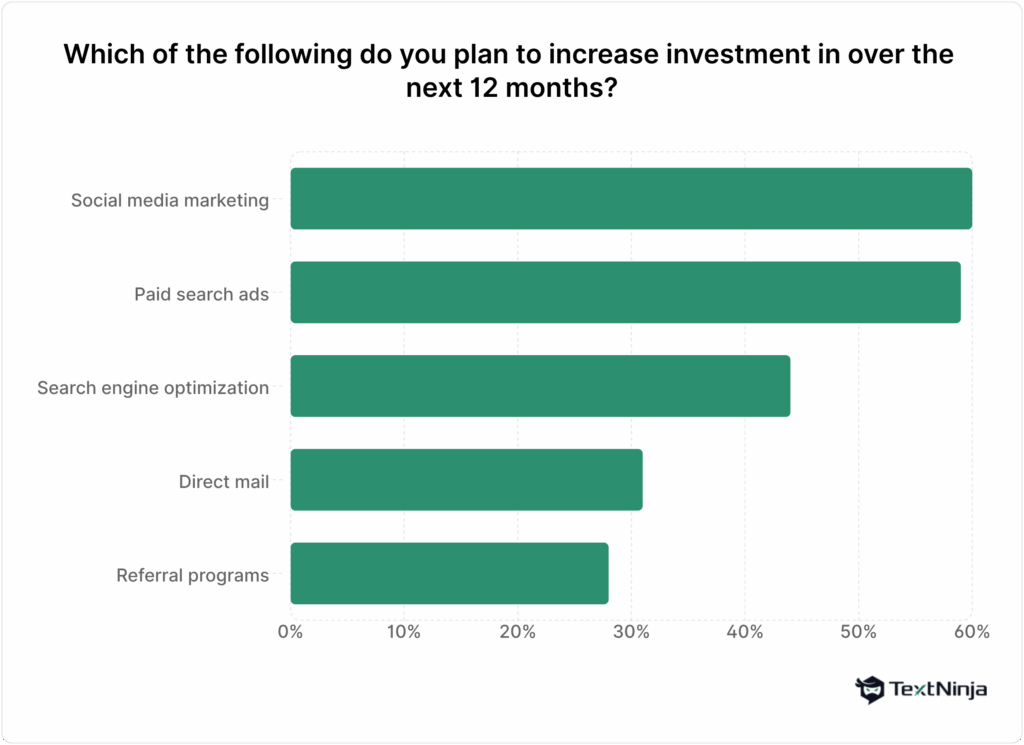
- 60% plan to increase social media investment in the next 12 months.
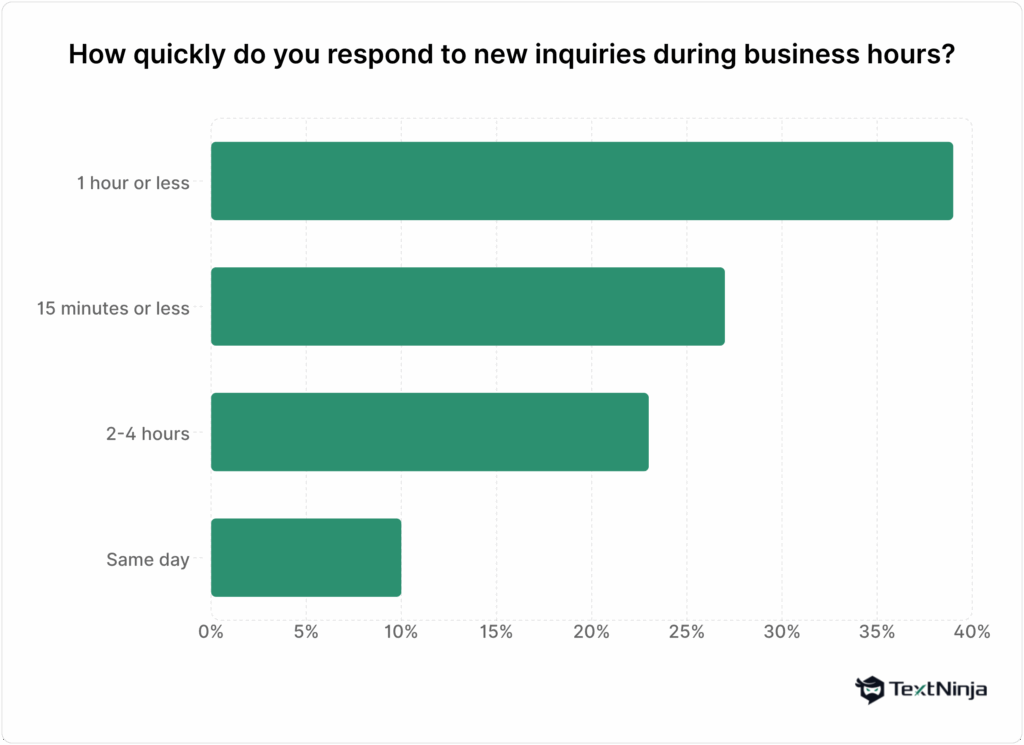
- Only 27% respond to new inquiries within 15 minutes
- 68% of HVAC businesses say they’ve lost jobs because they missed a call or responded too slowly
- 46% lack a documented follow-up process or rely on informal systems, creating inconsistency in how unbooked leads are handled.
Marketing investment is strong across HVAC
Most HVAC businesses today are not underinvesting in marketing. In our survey, over 62% reported spending more than $1,500 per month, and nearly 30% spend over $3,000 per month on marketing.
Paid search and social media are now mainstream investments: 73% use social media marketing and 71% run paid search ads. Roughly 60% plan to increase spend in both areas over the next year.
HVAC owners are allocating real budgets and actively managing performance. 66% say they closely track their cost per lead, and 67% say they’re confident their marketing generates quality leads.
Where things start to break down
Only 27% of HVAC businesses typically respond to new inquiries within 15 minutes during business hours. Another 39% respond within an hour. Beyond that, response times stretch quickly.
Nearly one in three HVAC businesses takes more than two hours to respond during business hours, and over one in ten doesn’t respond until much later in the day.
From inside the business, that delay can feel normal.
Teams are busy. Technicians are in the field. Phones are ringing.
But from the customer’s perspective, two hours is a long time. Especially when their heat stops working or the AC fails in the summer.
In a market where customers reach out to several businesses at once, the first clear response often determines who gets the job.
To understand the impact of slow responses, we asked owners directly whether they believe they’ve lost jobs because of missed calls or delayed replies.
The answer was unambiguous.
More than two-thirds said yes.
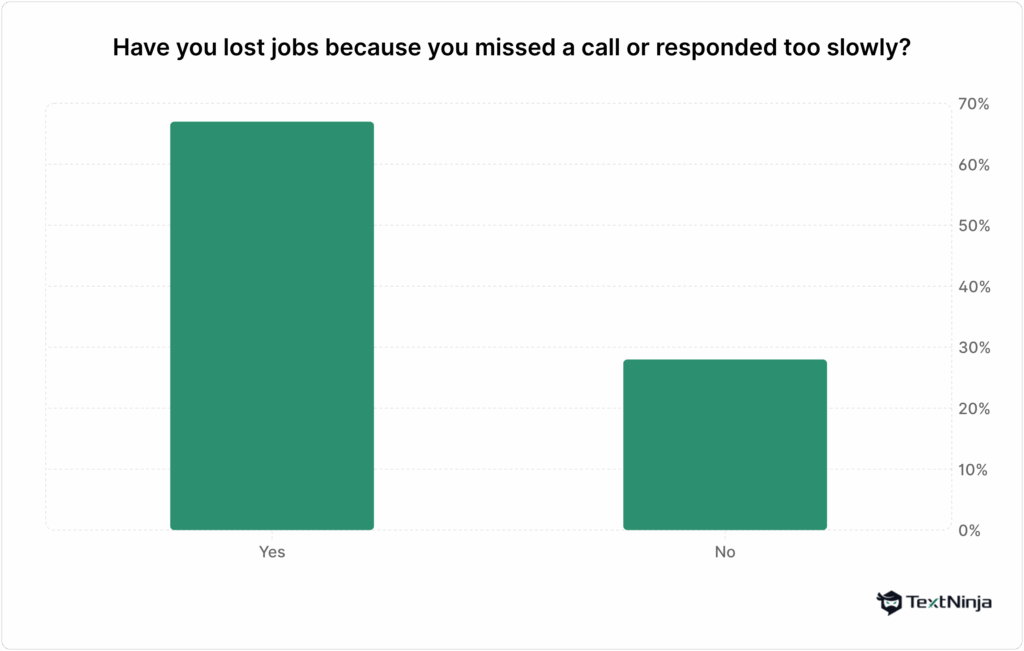
Some said it’s happened once or twice. Many said it happened repeatedly. Very few were confident it’s never happened to them.
Job loss due to response breakdowns is a widespread issue across HVAC businesses of all sizes.
Most HVAC owners aren’t intentionally ignoring leads. In fact, many feel confident their teams respond to every inquiry.
But confidence isn’t the same as visibility.
42% of the businesses we surveyed either don’t always follow up with unbooked leads or rely on informal, inconsistent follow-up processes.
Ready to grow your business?
Capture leads, engage customers instantly, and turn conversations into sales with TextNinja's powerful SMS chat widget.
Start free trial
Text messaging is a primary channel for HVAC communication
81% of HVAC businesses said customers can text their business phone number, and 50% said customers regularly reach out via SMS.
This makes texting one of the top three ways customers initiate contact, alongside website forms (64%) and phone calls (62%).
While texting is widely available, it isn’t always systematically managed. As already mentioned, response speed varies widely and follow-up discipline is inconsistent.
Part of the reason this persists is organizational. Marketing in HVAC is rarely handled by a dedicated team.
42% of respondents say the owner is primarily responsible for marketing, and 39% state it’s managed by an office or operations manager.
Only a small minority have in-house marketers or agencies overseeing the full funnel.
Owners focus on what’s visible and measurable: spend, leads, and volume.
What’s harder to see is response performance.
How fast messages are answered. Whether every inquiry receives a reply. Whether follow-ups happen consistently.
Without centralized visibility, breakdowns feel isolated rather than systemic, even when they’re costing real revenue.
Rethinking Marketing Performance in HVAC
The takeaway from this data is not that HVAC businesses need more leads, more channels, or more tools.
It’s that the definition of “marketing performance” needs to change.
In 2026, the HVAC businesses that win will be the ones that respond fast, communicate clearly, and make the first customer interaction feel effortless and professional.