
Small business marketing advice is often overwhelming or too expensive for the average small business. What most small businesses actually need isn’t more tactics, but rather clearer priorities and ideas that actually fit their day-to-day constraints.
To cut through the noise, we asked 15 business owners, founders, and marketers to share their top small business marketing tips.
Here’s what they said.
1. Focus on a specific niche you understand well
As a small business, it’s going to be hard to succeed if you try to cater to everyone.
Focusing on a specific niche will make it easier to communicate your value, earn trust, and stand out.
Here’s what Anthony Warren, the founder of Integrity House Buyers had to say about niching down:
“I concentrate on helping military families with PCS moves—a world I know firsthand.
Find that one specific group you genuinely understand, and your authentic connection will become your most powerful and cost-effective marketing tool.”
2. Use customer interviews to refine what you market
A lot of small businesses try to guess what customers want or what matters to them.
But it’s always better to ask. Interview customers to learn why they chose you and what impacts their buying decisions.
These interviews don’t have to be formal or time-consuming. A five-minute phone call with a customer can provide plenty of insights.
Rafael Sarim Oezdemir, Head of Growth at EZContacts, shares his experience with customer interviews:
“We spoke with customers and found many chose us because of our return policy and customer service—not our features. Once we realized that, we stopped marketing only features.”
3. Use customer language to inform your messaging and copy
The words and phrases your customers use to describe their problems (and the solution to them) can often be more persuasive than any copy you might come up with.
Read through customer reviews, emails, and call transcripts to uncover phrasing you can use across your website and other marketing materials.
Michael Gargiulo, the founder & CEO of VPN.com, explains:
“Those exact phrases outperform clever copy because they mirror how buyers actually think and search.”
4. Target high-intent, longtail search queries
Ranking for generic and broad keywords in organic search is very difficult.
Instead, focus on high-intent longtail search queries. Think about the questions your target customers might be asking and then write content that answers those questions.
David Cornado, a partner at the French Teachers Association of Hong Kong, says:
“When you focus on the niche questions people actually type into Google, you can rank higher and attract customers who are looking for exactly what you offer.”
5. Create service- and location-specific pages to match search intent
When potential customers visit your website, they want to immediately understand if you’re fit to solve their problem or not. Sending everyone to a generic homepage makes people hunt for answers about what you do, who you help, and which areas you serve.
To avoid this, create separate pages for every service you offer and each location you serve.
Make sure each page is unique, especially when it comes to location pages. Don’t just reuse the same content across every page.
Karl Threadgold, the managing director at Threadgold Consulting, shares his experience:
“We stopped sending everyone to our homepage and made a page just for NetSuite implementation. Our leads doubled in a week.”
6. Maintain an active Google Business Profile
When people search for your business, the first thing they’ll likely see is your Google Business Profile (GBP), not your website. This makes it crucial that you optimize your GBP and keep it active and up-to-date.
Don’t worry, this won’t take up too much of your time. 10-15 minutes per week is usually all it takes to keep your GBP active.
Justin Herring, the founder & CEO of Yeah! Local, shares how updating a client’s GBP helped drive more business:
“Just uploading new photos and replying to reviews took a business from page five to the top of the map—and brought in more calls than ads.”
7. Collect reviews at meaningful customer milestones
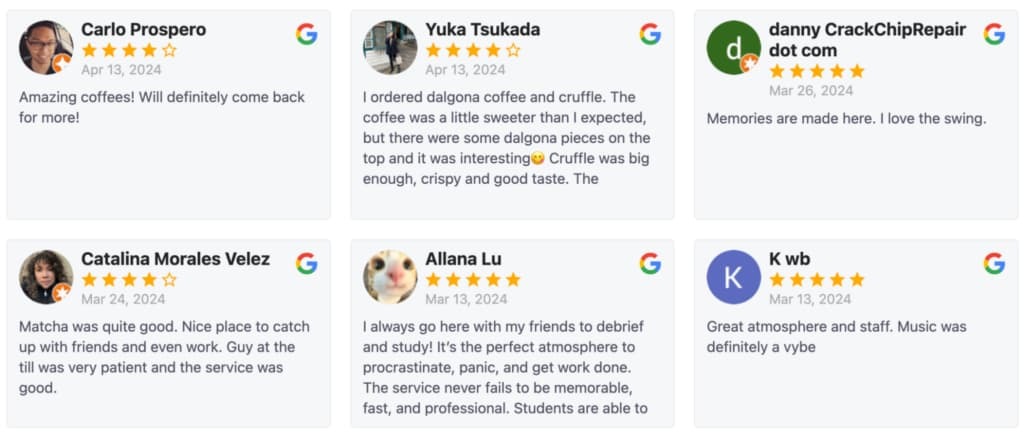
Reviews can make or break a business. Research shows that most consumers read 4-10 reviews before they buy from a business.
This makes it important that you have recent, positive reviews of your business on your Google Business Profile and your website.
And the best way to get them? Asking customers to review your business.
Ready to grow your business?
Capture leads, engage customers instantly, and turn conversations into sales with TextNinja's powerful SMS chat widget.
Start free trial
It’s important that you ask at the right time, though. This will increase your chances of actually getting customers to go through with writing the review.
Here’s what Vince Tint, the founder of 12 Steps Marketing, had to say about timing review requests:
“Don’t ask after a sale. Ask when a customer hits a real milestone and is actually happy.”
Pro tip: You can use LocalImpact to send automated email and SMS review reminders to customers and ensure everyone gets asked to leave a review. And display reviews on your site using LocalImpact’s review widget.
8. Repurpose testimonials into reusable marketing assets
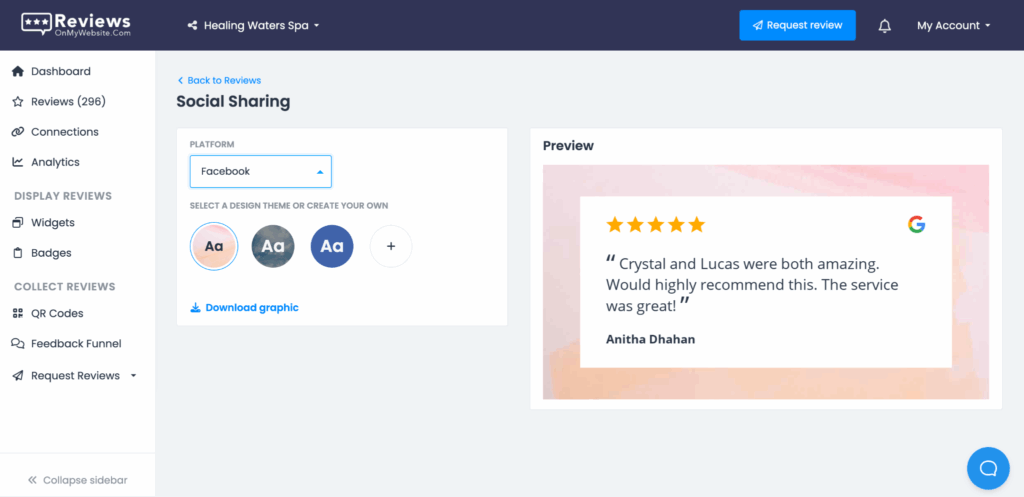
You can get much more value out of your customer reviews by repurposing them into social posts and using them across your email campaigns and sales materials.
Here’s what David Bishoff, president of E.V. Bishoff Company, had to say about repurposing reviews:
“Take those reviews and turn them into a testimonials page or social posts. The more you leverage them, the better they sell your business.”
Pro tip: You can use LocalImpact’s social sharing feature to turn your reviews into engaging social media posts and share them in just a few clicks.
9. Share behind-the-scenes content to build trust
Sharing behind-the-scenes content helps your business seem more human and allows you to develop rapport and build trust with existing and potential customers.
You can showcase how you make decisions and handle problems, or what goes into your process. Learning more about your business will make people feel more comfortable about choosing you.
Arsen Misakyan, the CEO of LAXcar, shared his thoughts on behind-the-scenes content:
“People trust you more once they understand how you think. Honesty is more effective than promotional marketing.”
10. Differentiate through fast and reliable response times
How quickly you respond to customer inquiries says a lot about your business. When customers reach out, they expect to hear back fast. And when they do, they assume you’re reliable.
Taking a long time to respond creates doubt and makes potential customers feel hesitant to buy from you.
Here’s what Eric Camardelle, the owner of Salt & Light Propery Solutions had to say:
“When I tell a family I’ll call them back, I call them back. That reputation is worth more than any advertising.”
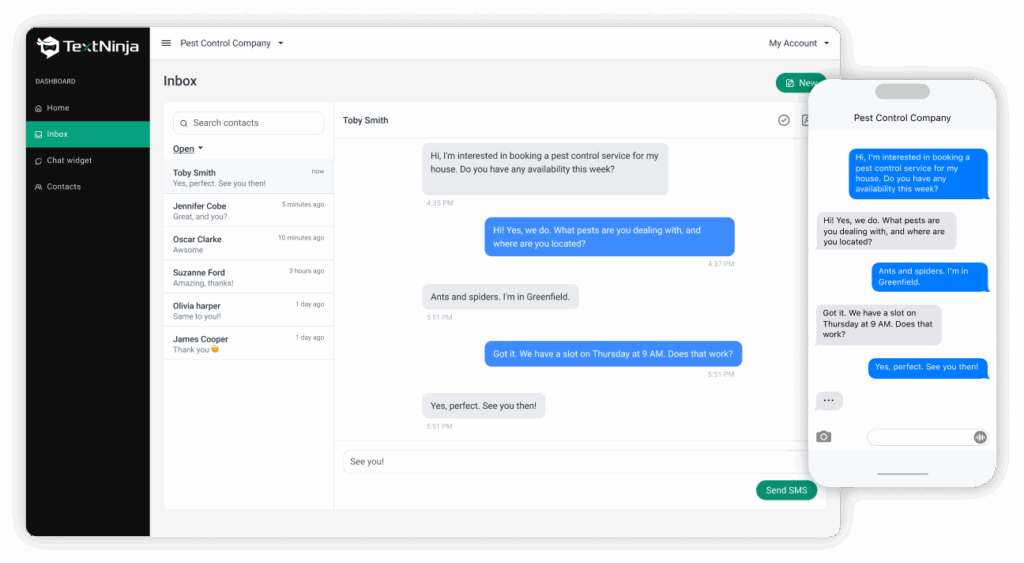
Pro tip: You can use TextNinja to let potential customers start a conversation with you via text. The automated replies feature ensures they get a response straight away.
11. Participate in relevant online communities to build credibility
Being present in online communities where your target customers hang out already is a great way to increase your business’s visibility for free.
Try to find relevant Facebook groups, forums, or neighborhood communities and start participating in the conversations.
Ready to grow your business?
Capture leads, engage customers instantly, and turn conversations into sales with TextNinja's powerful SMS chat widget.
Start free trial
Avoid being overly promotional. Instead, focus on answering questions and offering genuine helpful advice. Over time, you should start receiving inbound interest from potential customers.
Ryan Nelson, the founder of Stock Calculator, shares his experience with online communities:
“We answered questions in forums instead of dropping links, and sign-ups increased from users who actually stuck around.”
12. Use an email newsletter to provide ongoing value
Email as a marketing channel works best when it’s educational rather than promotional.
Starting a newsletter where you offer tips and insights for your customers can keep your business top of mind and make it more likely that people reach out to you when they actually need what you sell.
Branden Shortt, the founder of The Informr, shares his experience with email newsletters:
“We switched from sales pitches to simple tips, and open rates doubled.”
13. Partner with nearby or complementary local businesses
Partnering with other local businesses can help you reach new customers without spending a lot of money. When a business they trust recommends you, people feel more confident about buying from you.
Once you find a business to partner with, you can start out with simple cross-promotions or co-hosted events to get in front of each other’s customers.
Carl Fanaro, the president of NOLA Buys Houses shared his experience with partnerships:
“We teamed up with a landscaping company and sent customers each other’s way. It worked surprisingly well.”
14. Use offline gestures to create memorable customer experiences
A handwritten note or a quick follow-up call can show customers that they’re not just another transaction. These types of small moments are easy to remember and can leave a long-lasting impression.
They’re also a great way to increase the chances of customers giving you a positive review or sending referrals your way.
“Handwritten thank-you cards brought repeat calls and referrals because people remembered me.”
15. Position your business as a local resource, not just a vendor
Sharing local tips or talking about what’s happening in your area can help you earn trust and show that you care about your community.
It can shift how people see you and turn you from a vendor into someone who knows and belongs in the neighborhood. And make people feel more comfortable choosing you.
Richard Morrison, the founder of Richard Morrison Vancouver Homes, shared his experience:
“I started spotlighting local cafes and quiet parks on my real estate page. Clients would tell me those posts were what made them feel confident about picking a neighborhood.
It's a better conversation starter than any ad. If you want more local customers, just start sharing stories about these small places.
People will respond.”
Grow your small business by staying consistent
Effective small business marketing isn’t about doing more; it’s about doing a few things consistently and well.
Pick 2-3 tips outlined above and work on implementing them over the upcoming weeks.