
There’s no shortage of digital marketing tools on the market. The challenge is in knowing which ones are actually worth using.
In this guide, we break down some of the most popular tools across SEO, content, email, paid ads, automation, analytics, and more.
SEO tools
SEO tools help businesses improve their visibility in search engines by identifying keyword opportunities, analyzing competitors, and uncovering technical issues.
They provide data on rankings, backlinks, and search intent so you can prioritize content and optimization efforts. Teams use them to drive consistent organic traffic growth.
1. Ahrefs
We’ve used Ahrefs extensively for competitor research and backlink analysis, and it’s one of the fastest ways to understand why a page is ranking.
The Site Explorer makes it easy to break down a competitor’s top-performing pages, see which keywords drive traffic, and identify where their backlinks are coming from.
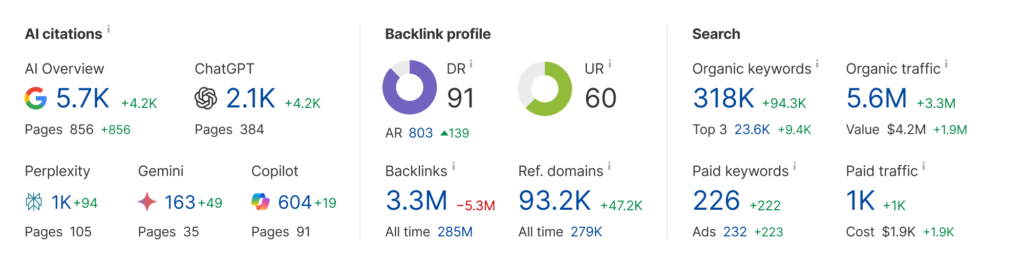
We regularly use the Content Gap feature to uncover keywords multiple competitors rank for that a site doesn’t, which helps prioritize new content opportunities.
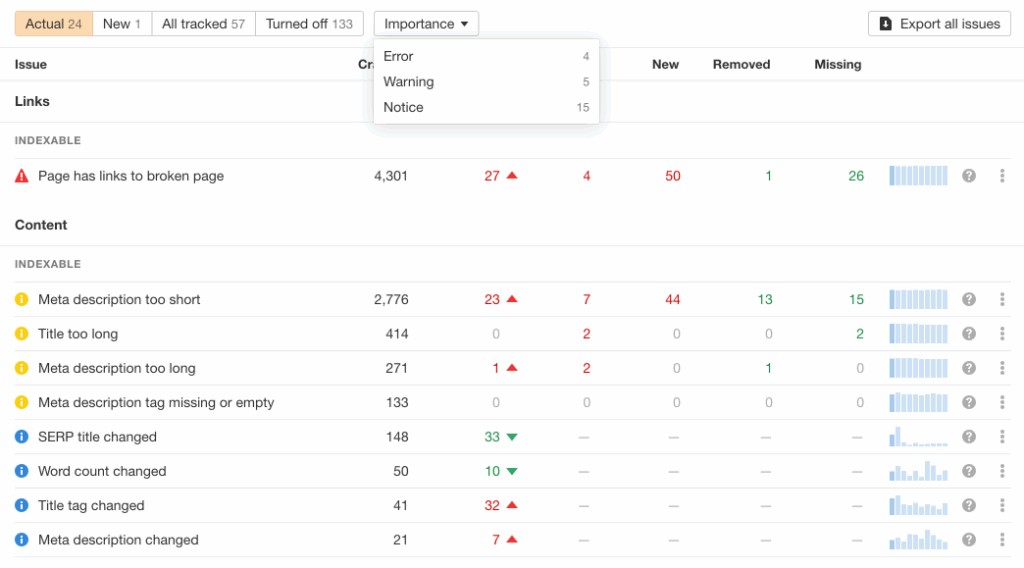
The Site Audit tool is detailed but still practical, surfacing technical issues in a way that’s actionable rather than overly complex.
The SERP overview is particularly helpful when validating keyword difficulty before investing time in creating content.
What we like
Compared to other SEO platforms, Ahrefs feels especially strong on competitive research and link intelligence.
If your workflow revolves around reverse-engineering competitors and identifying realistic ranking opportunities, Ahrefs tends to surface those insights faster and more clearly than most alternatives.
2. Semrush
Semrush is one of the most versatile platforms we’ve worked with, especially when managing both SEO and paid acquisition.
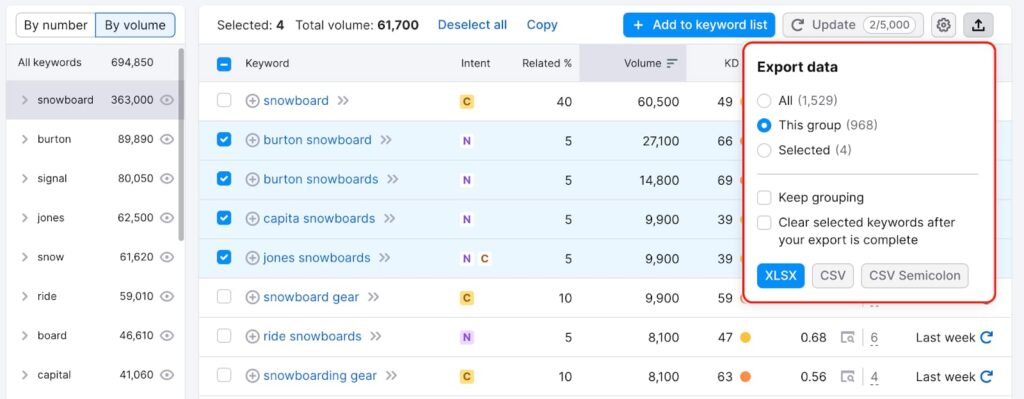
The Keyword Magic Tool makes it easy to turn a broad topic into a structured list of keyword variations, which is helpful when building topic clusters or planning long-form content.
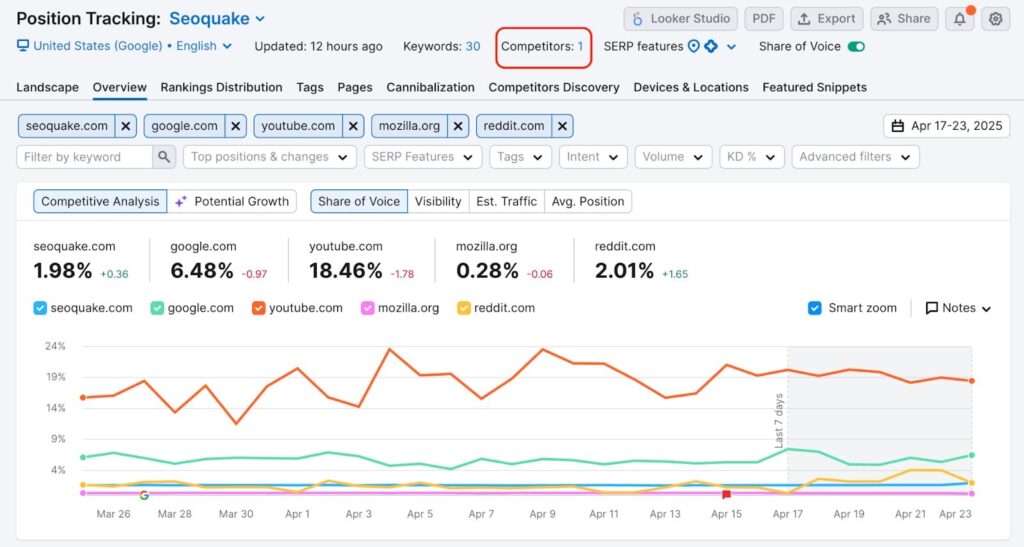
Its Position Tracking feature gives clear visibility into ranking movements over time, including local tracking when needed.
The Site Audit tool does a good job of prioritizing technical issues so you’re not overwhelmed with noise.
We’ve also found the Advertising Research reports useful for quickly understanding how competitors structure their PPC campaigns.
What we like
Semrush stands out because it combines SEO and paid search intelligence in a way that feels cohesive rather than bolted together.
For teams running multi-channel acquisition, having competitive data for both organic and PPC inside one interface makes strategy decisions much easier.
3. Moz
Moz is one of the more straightforward SEO platforms we’ve tested, particularly when it comes to keyword research and tracking performance over time.
The Keyword Explorer provides a clean breakdown of difficulty, search volume, and opportunity, which makes it easy to prioritize targets without overanalyzing.
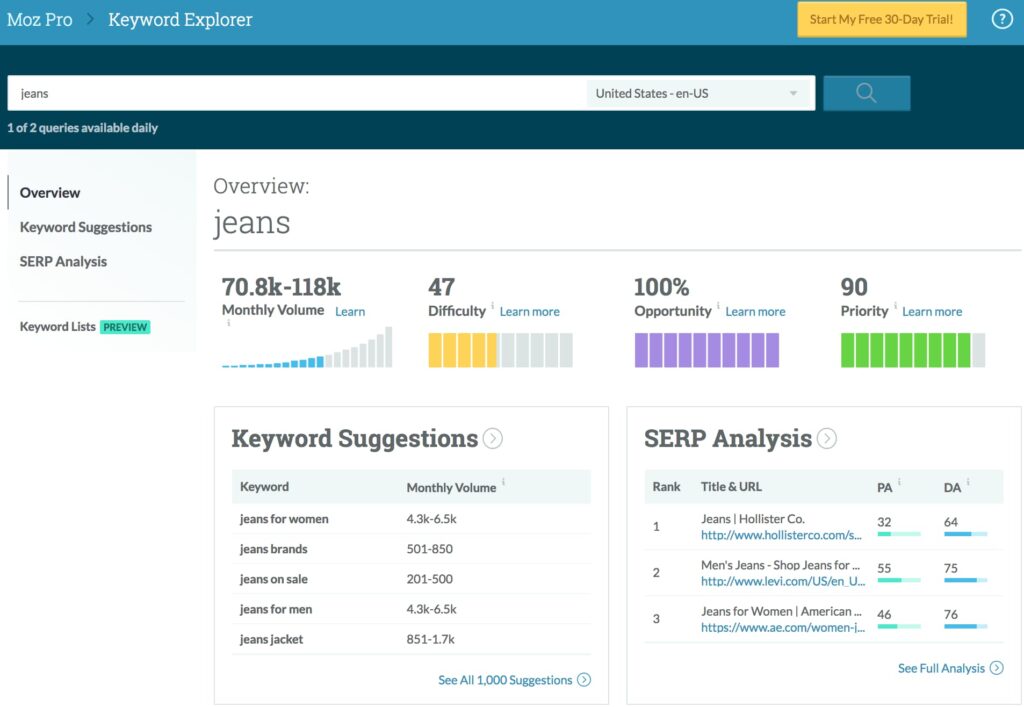
Its rank tracking is reliable and simple to set up, making it suitable for ongoing performance monitoring.
The site crawl feature highlights technical issues in a digestible way, which is helpful for smaller teams without a dedicated technical SEO specialist.
The interface overall feels less overwhelming compared to some more data-heavy tools.
What we like
Moz stands out for its simplicity and accessibility.
While other platforms can feel dense and built for power users, Moz makes core SEO workflows easier to navigate, which can be especially appealing for smaller teams or marketers who don’t need enterprise-level complexity.
Content marketing tools
Content marketing tools support the planning, creation, optimization, and distribution of content across channels.
They help teams collaborate more efficiently, improve on-page SEO, and maintain editorial workflows. These tools are especially useful when scaling content production.
4. StoryChief
StoryChief is built around collaborative content workflows, and that’s where it really shines.
Instead of jumping between Google Docs, WordPress, and social schedulers, you can plan, write, optimize, and publish from one place.
The editorial calendar makes it easier to see what’s coming up, who’s responsible, and where each piece stands in the approval process.
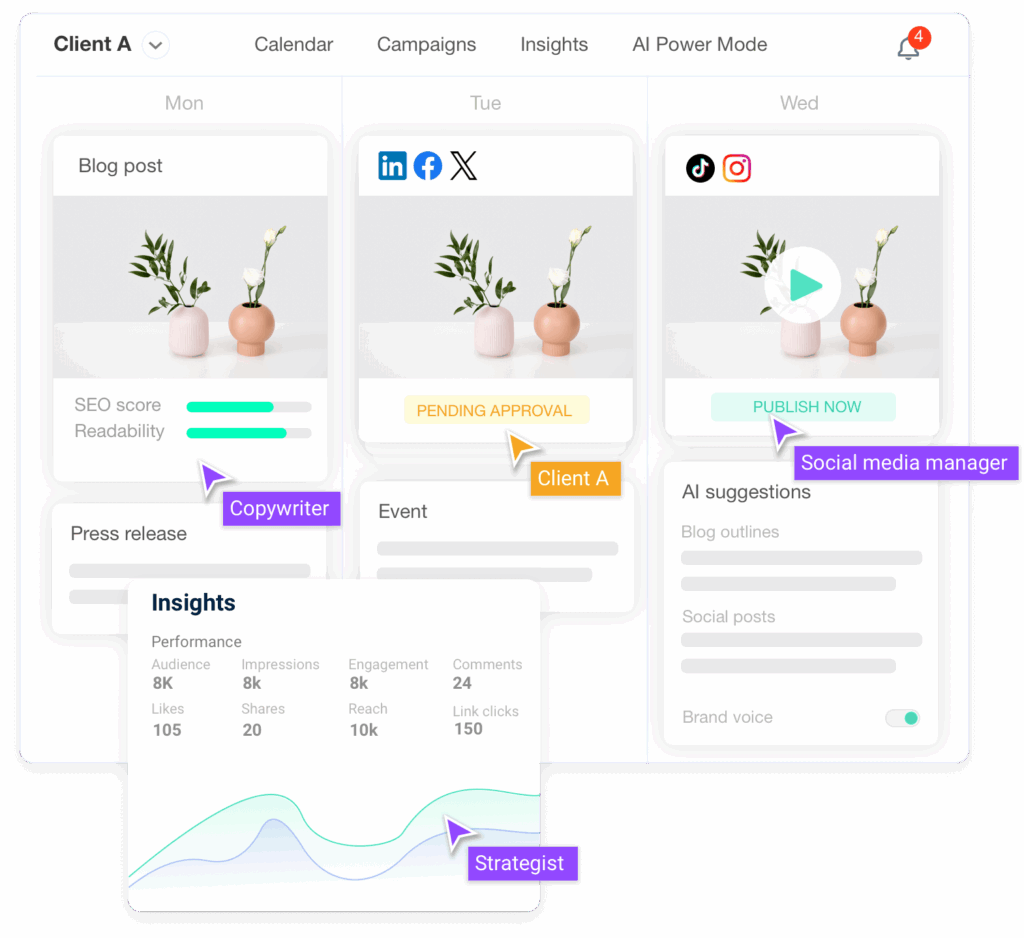
Built-in SEO suggestions help structure content before it goes live, which reduces the back-and-forth between writers and SEO managers.
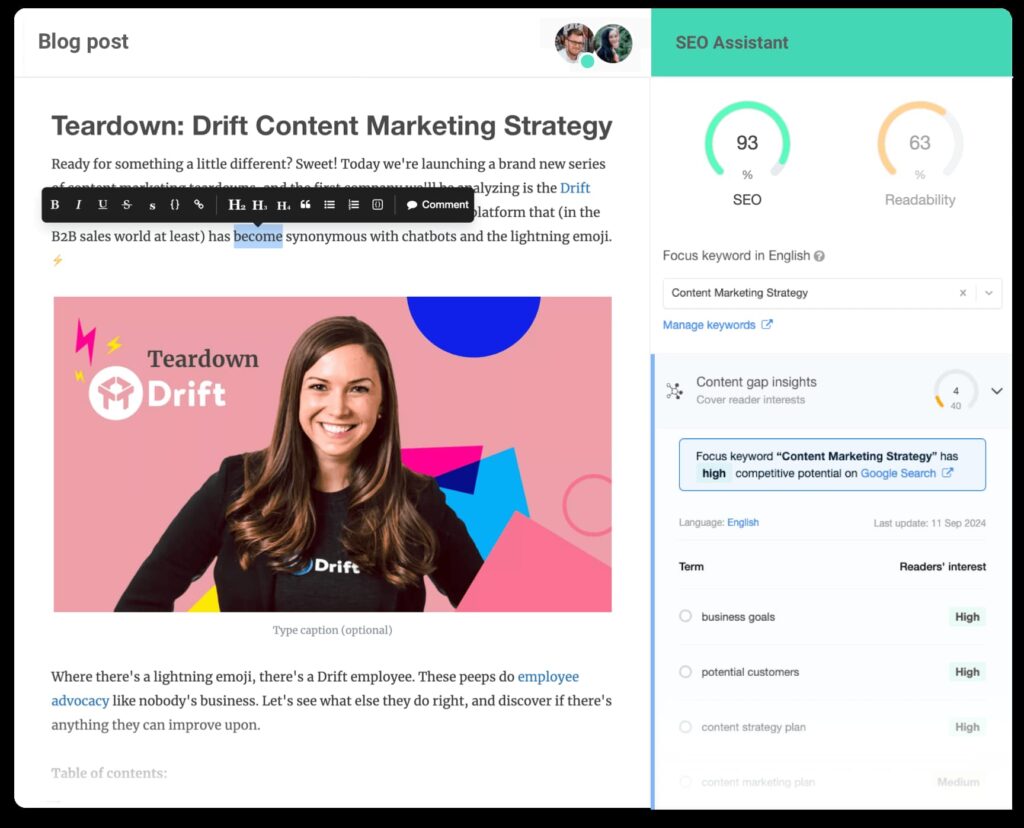
Multi-channel publishing also saves time when distributing content across blogs, newsletters, and social platforms.
What we like
StoryChief stands out for combining content creation and distribution in one workflow.
Most tools focus on writing or publishing, but StoryChief connects both, which makes it especially useful for teams that care about process and consistency across channels.
5. Surfer
Surfer is one of the more data-driven content optimization tools we’ve worked with.
When creating SEO-focused articles, the Content Editor provides clear guidelines based on what’s currently ranking, including keyword usage, structure, and length recommendations.
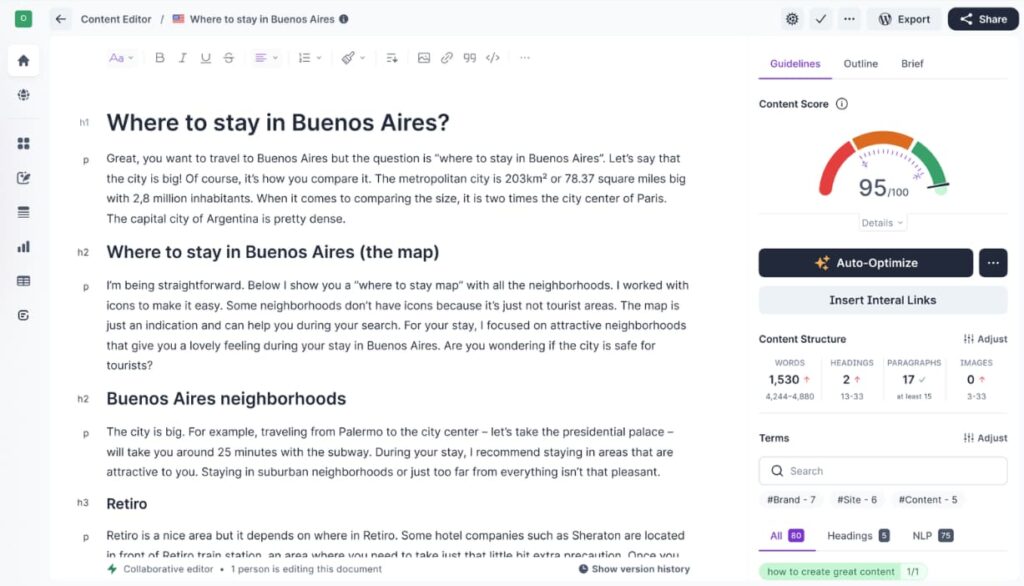
It’s particularly useful when you want to benchmark a draft against competitors before publishing.
The SERP Analyzer breaks down common patterns across top-ranking pages, which helps validate whether a topic requires depth, listicles, or supporting sections.
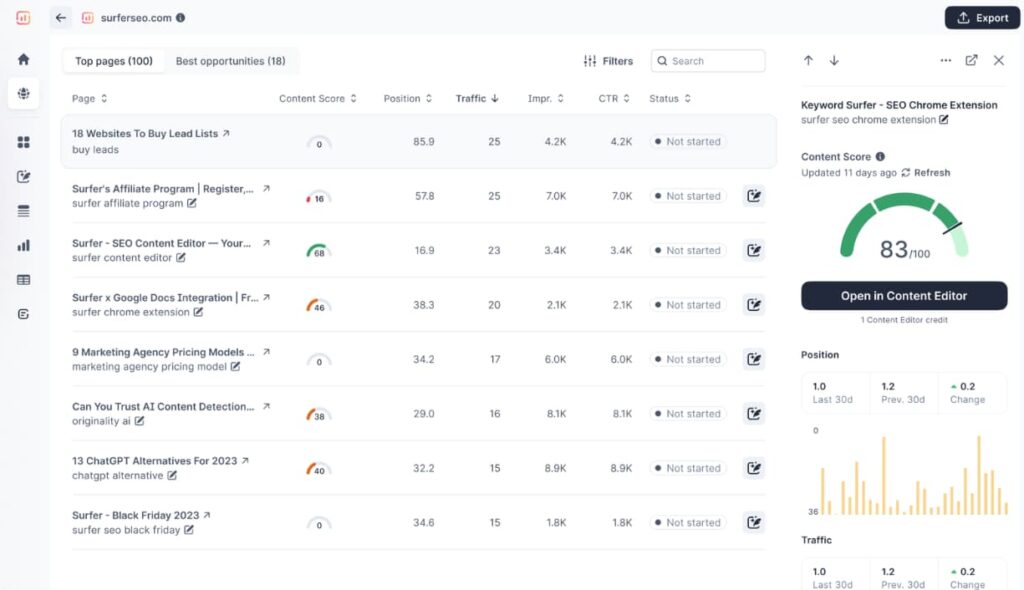
The Content Planner is also helpful when mapping out clusters around a primary topic.
What we like
Surfer stands out because it ties its recommendations directly to live SERP data.
Instead of generic SEO advice, you’re optimizing against what’s actually ranking right now, which makes it especially practical for teams focused on measurable organic growth.
Ready to grow your business?
Capture leads, engage customers instantly, and turn conversations into sales with TextNinja's powerful SMS chat widget.
Start free trial
6. Grammarly
Grammarly is one of those tools that quietly improves almost everything you write.
It works across browsers, email platforms, Google Docs, and CMS editors, which makes it easy to integrate into daily workflows without changing how you work.
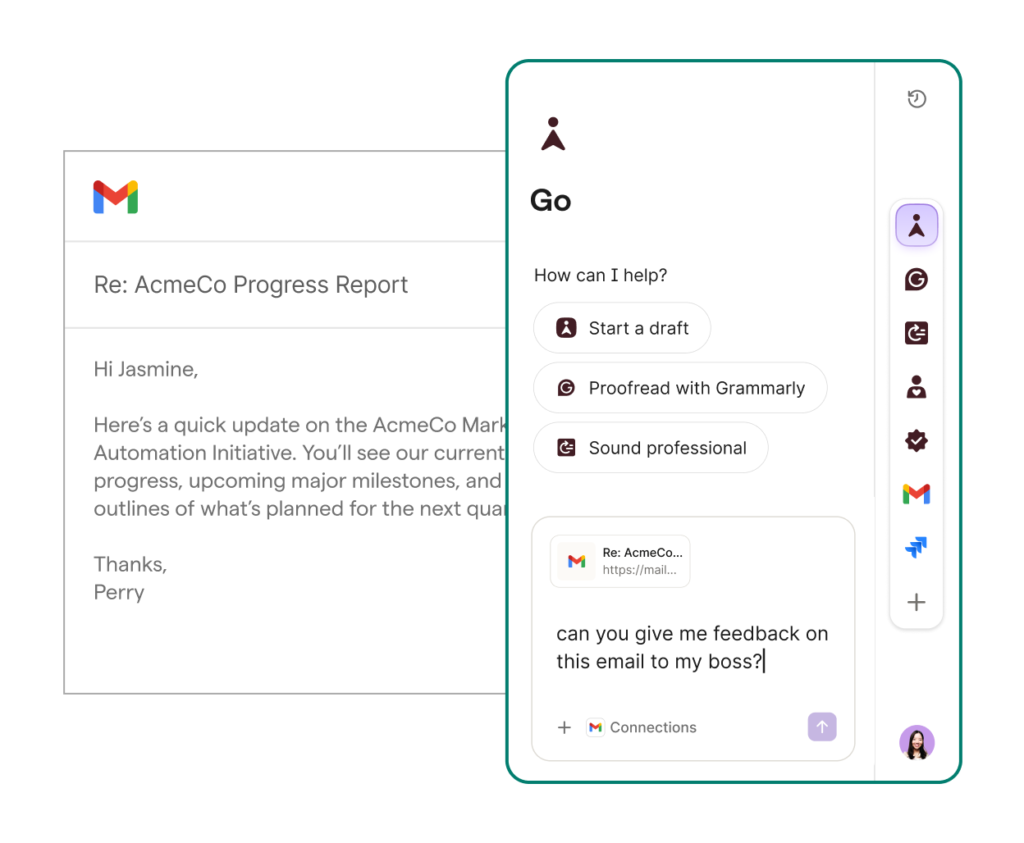
Beyond basic grammar and spelling, it suggests clarity improvements, tone adjustments, and sentence rewrites that make content more concise.
For marketing teams, that’s especially helpful when refining landing pages, ad copy, or outreach emails. The premium version also offers tone detection and more advanced rewriting suggestions.
What we like
Grammarly stands out because it works almost everywhere you write. Unlike most content tools that live in a separate dashboard, Grammarly follows you across platforms, making it a seamless quality-control layer rather than a standalone writing tool.
Email marketing tools
Email marketing tools allow businesses to build subscriber lists, send campaigns, and automate lifecycle sequences.
They support segmentation, personalization, and performance tracking. Many platforms also include CRM functionality to align marketing and sales efforts.
7. Mailchimp
Mailchimp is often one of the first email marketing platforms teams try, and it’s easy to see why.
The drag-and-drop email builder makes it simple to create campaigns without touching code, and the template library speeds up production.
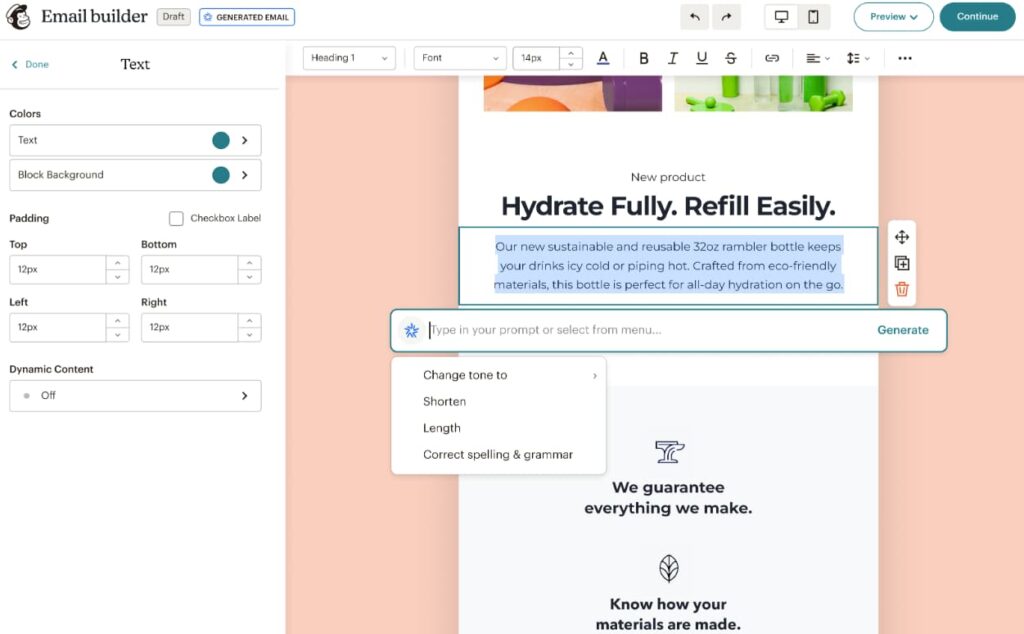
Setting up basic automations like welcome sequences or abandoned cart emails is straightforward, even for non-technical users.
Audience segmentation tools allow you to group subscribers based on behavior or engagement, which helps move beyond batch-and-blast campaigns.
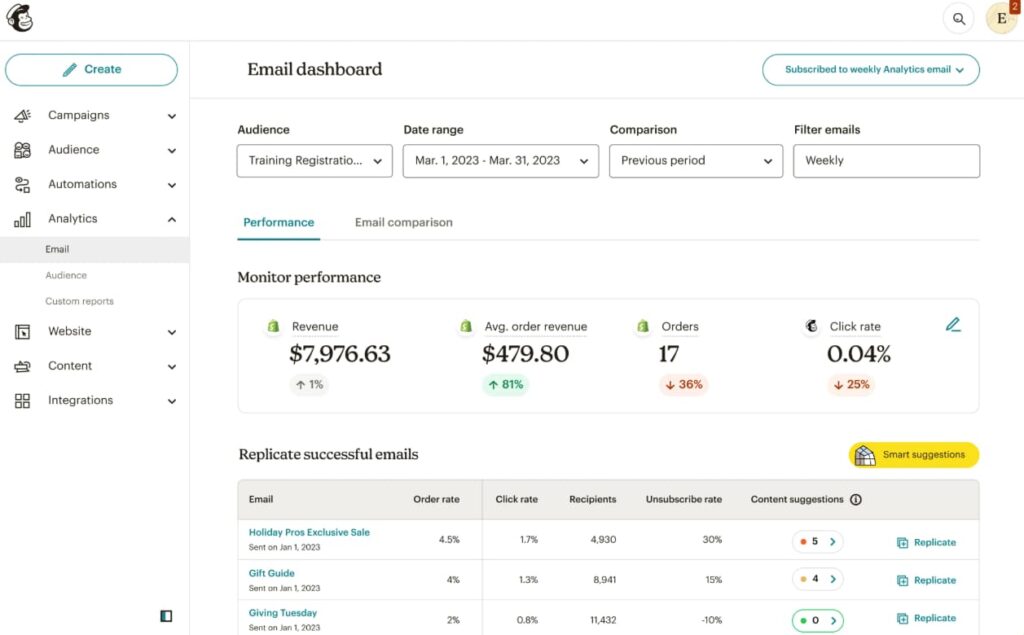
The reporting dashboard provides a clear view of open rates, clicks, and overall campaign performance.
What we like
Mailchimp stands out for its ease of use and accessibility. While more advanced platforms offer deeper automation logic, Mailchimp strikes a strong balance between functionality and simplicity, making it a solid choice for smaller teams that want to move quickly without a steep learning curve.
8. ActiveCampaign
ActiveCampaign is a platform we’ve found particularly strong for building more advanced lifecycle marketing workflows.
The visual automation builder makes it possible to map out complex sequences based on behavior, tags, and engagement triggers without feeling overly technical.
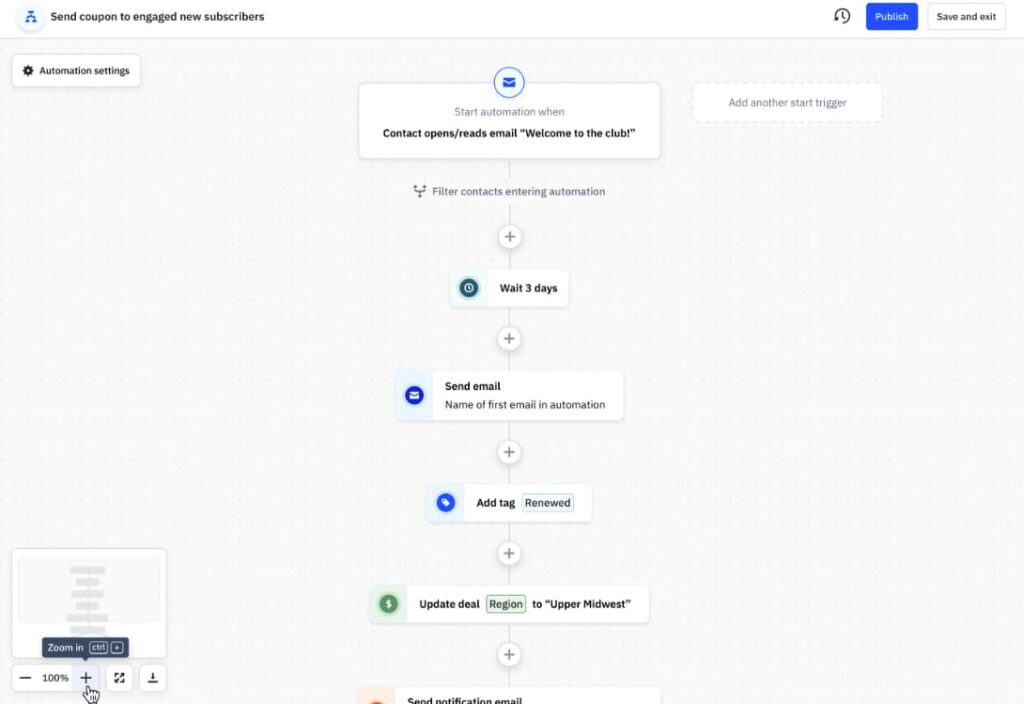
It’s well-suited for nurturing leads over longer sales cycles, especially when you need conditional logic and branching paths.
The built-in CRM also allows marketing and sales data to live in the same system, which helps align follow-ups and pipeline visibility.
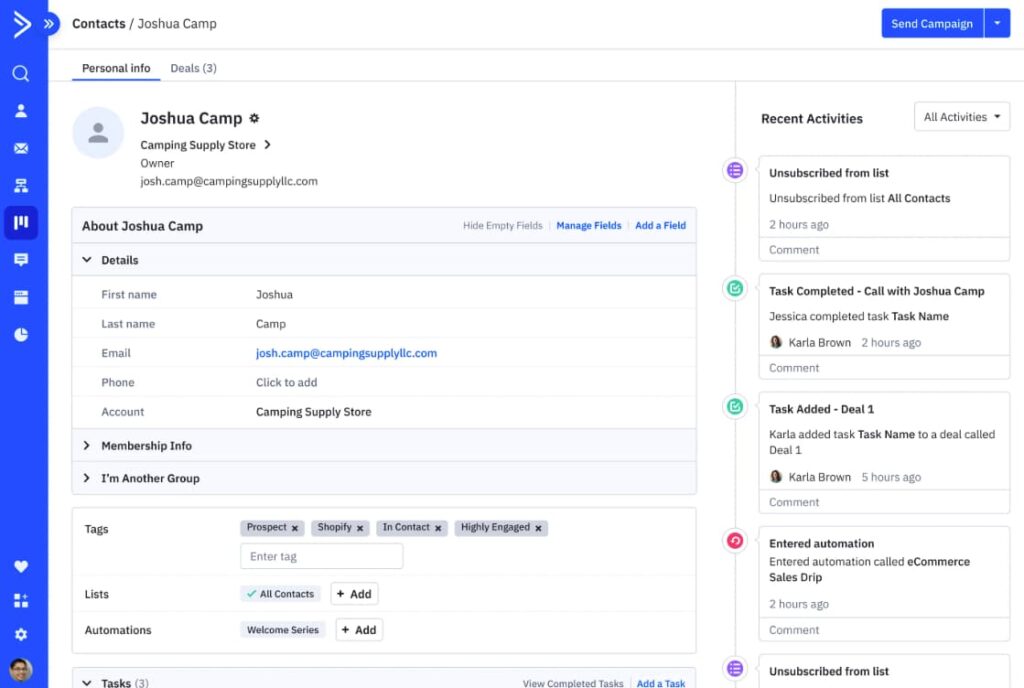
Reporting goes beyond opens and clicks, giving insight into how automations actually drive conversions.
What we like
ActiveCampaign stands out for the flexibility of its automation builder. Compared to simpler email tools, it allows much more granular control over segmentation and behavior-driven sequences without requiring enterprise-level software or pricing.
9. Klaviyo
Klaviyo is particularly strong when it comes to ecommerce-focused email marketing. Its integration with platforms like Shopify makes it easy to sync purchase history, browsing behavior, and customer data without complicated setup.
That allows you to build highly targeted flows such as abandoned cart reminders, post-purchase follow-ups, and win-back campaigns based on real revenue data.
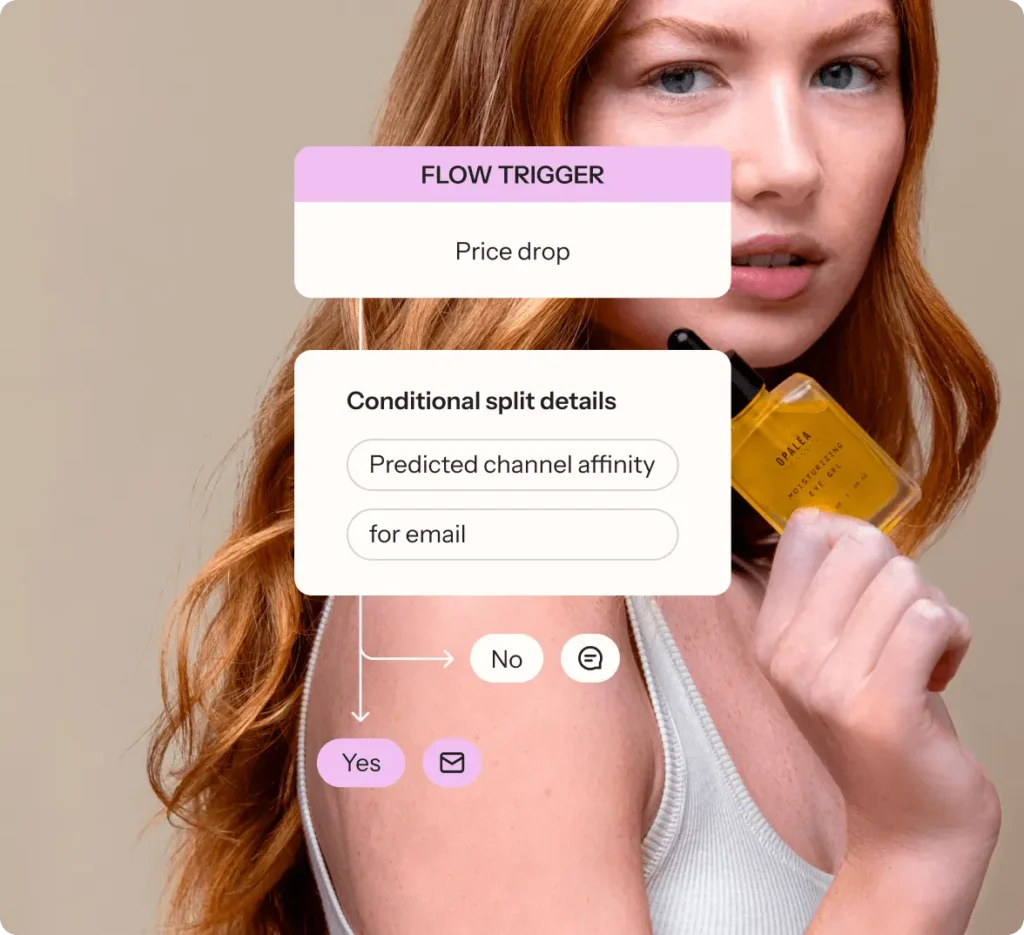
The segmentation capabilities are detailed but intuitive, which makes it easier to personalize campaigns at scale. Reporting also connects campaigns directly to revenue, not just engagement metrics.
What we like
Klaviyo stands out because of how tightly it integrates with ecommerce data.
Unlike more general email platforms, it’s built around customer and purchase behavior, which makes it especially effective for brands focused on maximizing revenue per subscriber.
Social media marketing tools
Social media marketing tools help teams schedule posts, monitor engagement, and analyze performance across platforms.
They streamline publishing workflows and centralize communication management. More advanced platforms also offer social listening and reporting features.
10. Buffer
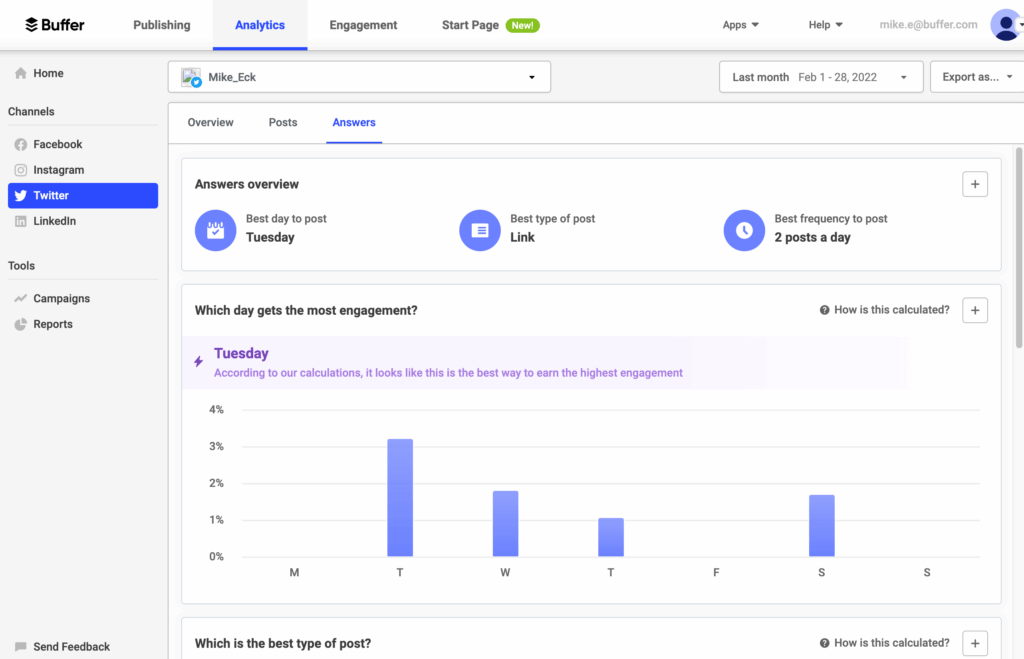
Buffer is one of the more straightforward social media scheduling tools we’ve worked with, especially for smaller teams or solo marketers.
The interface is clean and easy to navigate, which makes planning and scheduling posts across platforms simple.
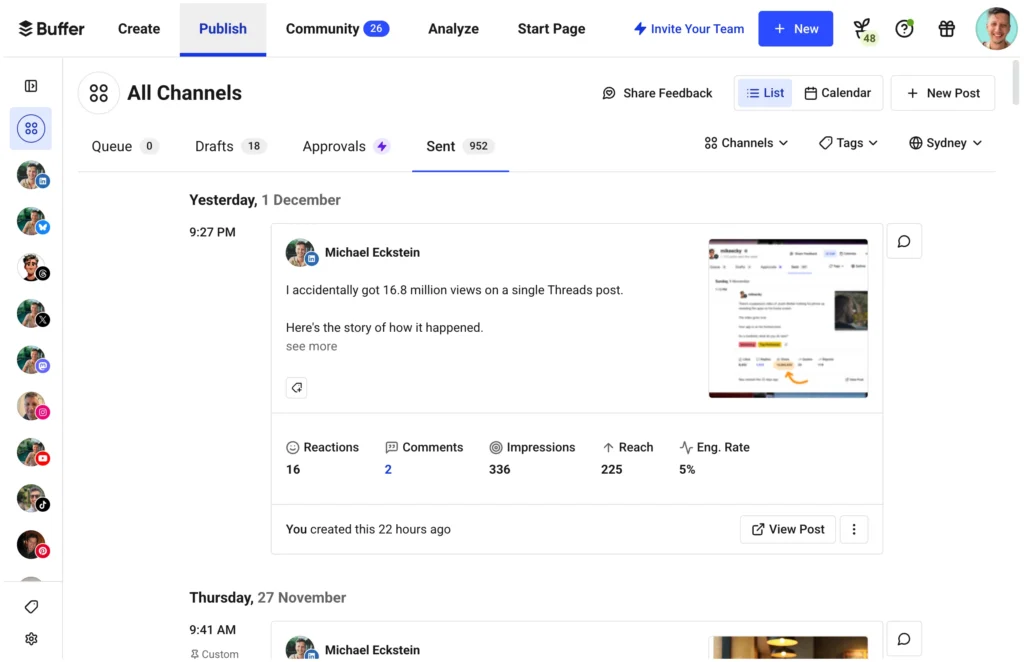
Queueing content in advance takes just a few clicks, and the calendar view gives a clear overview of what’s going out and when.
Basic analytics provide insight into engagement and post performance without overwhelming you with data. It’s particularly useful when consistency and simplicity matter more than advanced social listening.
What we like
Buffer stands out for its simplicity. While more advanced tools focus on monitoring and listening, Buffer excels at making scheduling fast and frictionless, which is ideal for teams that primarily need reliable publishing without extra complexity.
Ready to grow your business?
Capture leads, engage customers instantly, and turn conversations into sales with TextNinja's powerful SMS chat widget.
Start free trial
11. Hootsuite
Hootsuite is built for managing multiple social accounts at scale. The dashboard allows you to monitor feeds, mentions, messages, and scheduled posts in one place, which is useful when handling several platforms simultaneously.
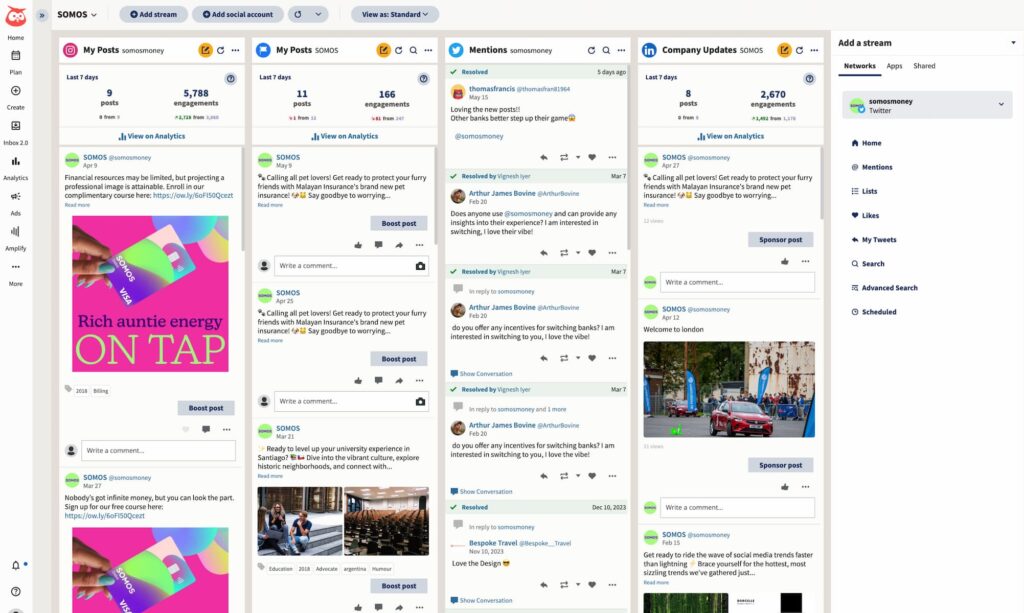
Its scheduling tools are robust, and the bulk scheduling feature can save time when planning campaigns in advance.
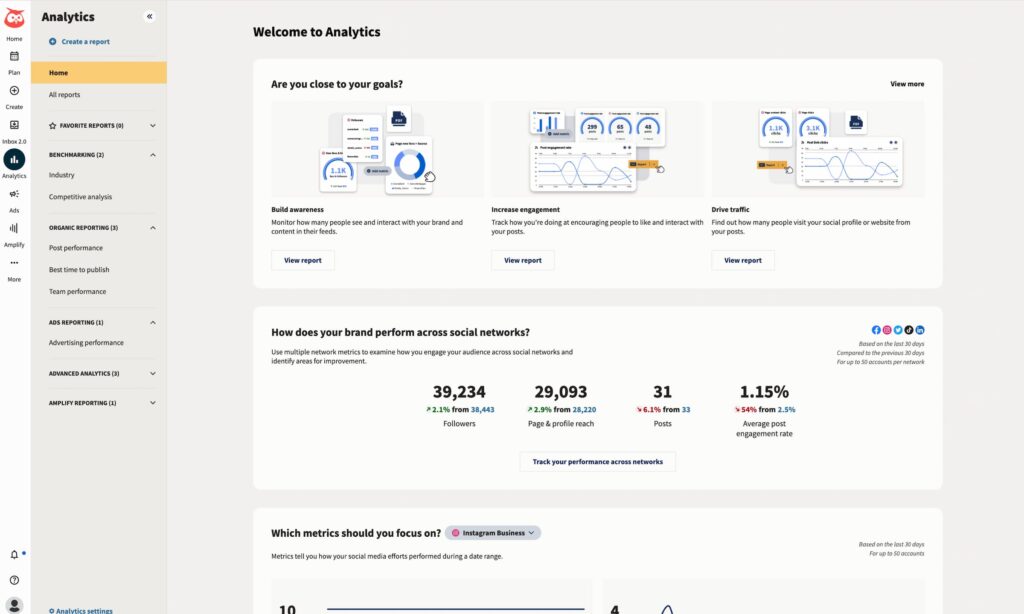
Team collaboration features make it easier to assign messages, approve content, and manage workflows across departments. The analytics dashboards provide a consolidated view of engagement and performance across channels.
What we like
Hootsuite stands out for its monitoring and team collaboration capabilities. Compared to simpler scheduling tools, it’s better suited for brands that need structured workflows, message assignment, and centralized social listening across multiple accounts.
12. Sprout Social
Sprout Social is a more advanced social media management platform designed for teams that need deeper analytics and structured workflows.
The publishing tools are polished and support approval processes, which is helpful for brands with multiple stakeholders.
Its Smart Inbox centralizes messages and comments from different platforms, making engagement easier to manage.
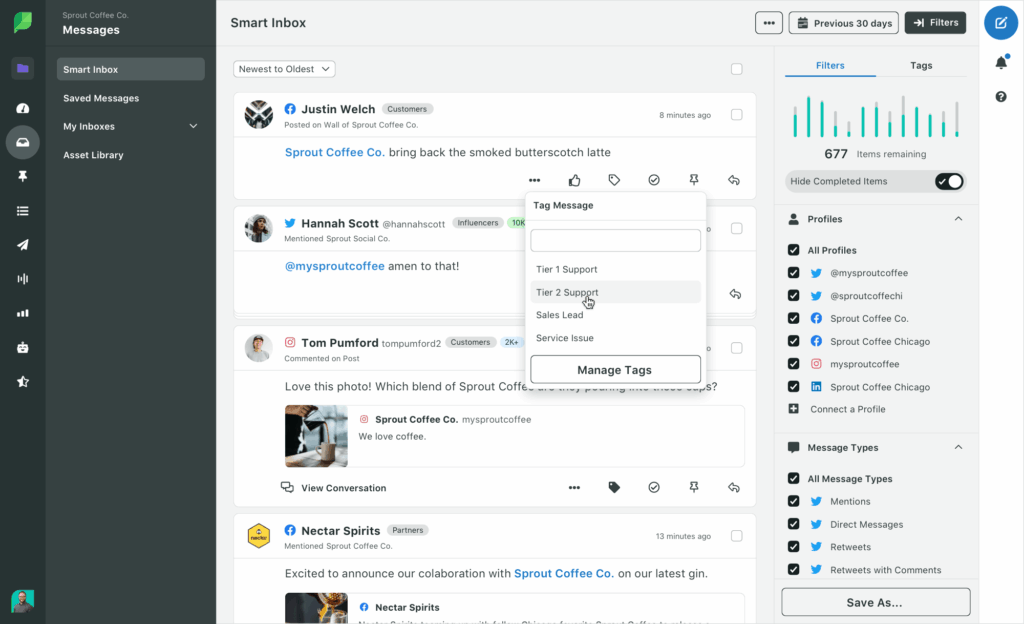
The reporting features go beyond surface-level metrics, offering detailed breakdowns of engagement, audience growth, and performance trends. It also includes social listening tools for tracking brand mentions and industry conversations.
What we like
Sprout Social stands out for its reporting and presentation-ready analytics. Compared to lighter scheduling tools, it offers more polished, stakeholder-friendly reports, making it especially valuable for agencies and larger marketing teams.
Online reputation management tools
Online reputation management tools help businesses collect, monitor, and respond to customer reviews across platforms.
They centralize feedback and make it easier to maintain consistent engagement. These tools are especially important for local and service-based businesses.
13. LocalImpact
LocalImpact is an online reputation management platform that helps businesses monitor, respond to, and manage online reviews.
It offers a review feed you can use to read and reply to reviews across 26+ platforms.
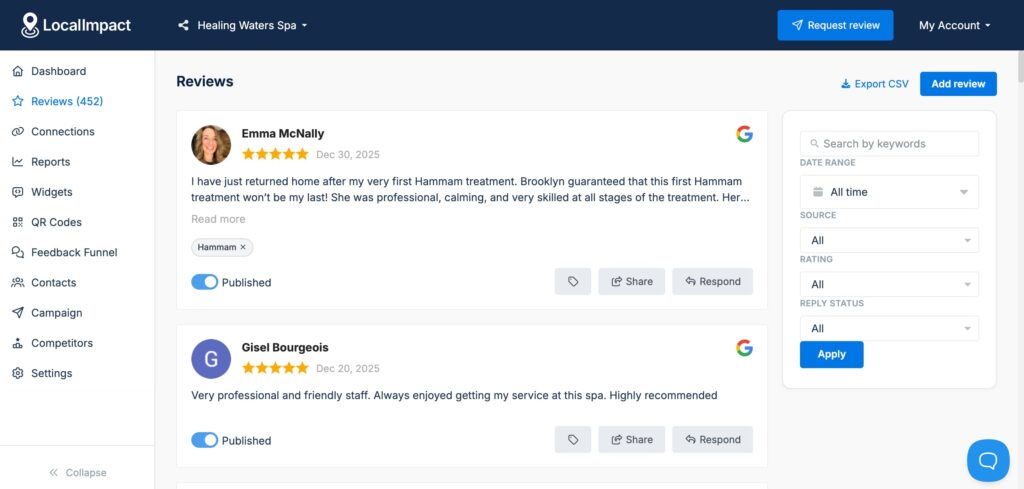
You can also use LocalImpact to set up automated email and SMS review request campaigns and generate reviews on autopilot.
Then, there’s the review widget feature, which you can use to display top customer reviews on your website with ease.

What we like
LocalImpact offers an AI-powered reply feature that allows you to generate personalized review responses in seconds.
Paid advertising tools
Paid advertising tools help marketers manage, optimize, and analyze paid campaigns across search and social platforms.
They often include automation features, performance alerts, and competitive insights. These tools are commonly used to improve efficiency and return on ad spend.
14. Optmyzr
Optmyzr is a platform we’ve found particularly useful when managing multiple PPC accounts at once.
Instead of manually checking budgets and bids every day, the rule-based automation allows you to set guardrails and let the system handle routine optimizations.
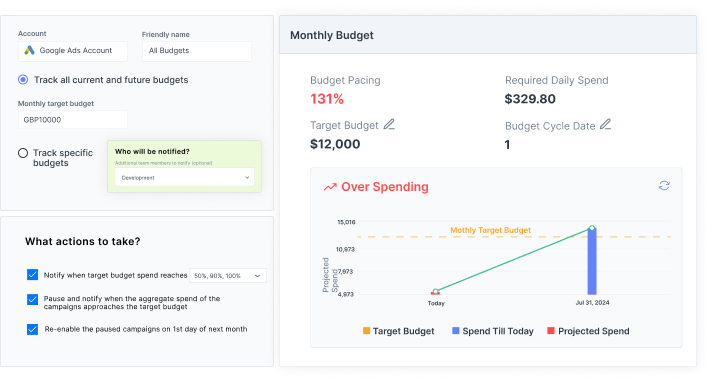
The account audit tools surface performance issues quickly, which helps prioritize what actually needs attention.
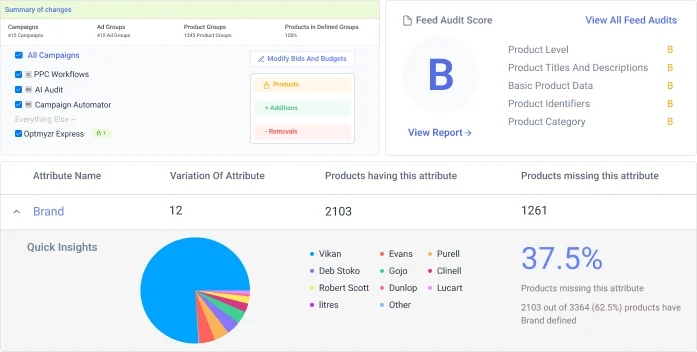
The one-click optimization suggestions are helpful for speeding up workflows, especially when handling larger accounts with dozens of campaigns.
Reporting is flexible enough to generate clean summaries for stakeholders without exporting raw data into another tool.
What we like
Optmyzr stands out for how much control it gives over automation logic.
Compared to more beginner-friendly ad tools, it’s better suited for experienced PPC managers who want granular rule creation and hands-on control over optimization strategy rather than relying purely on black-box automation.
15. SpyFu
SpyFu is a competitive intelligence tool we’ve used primarily for uncovering what competitors are doing in both SEO and paid search.
It’s particularly useful when you want to quickly see which keywords a competitor is bidding on and how their ad copy has evolved over time.
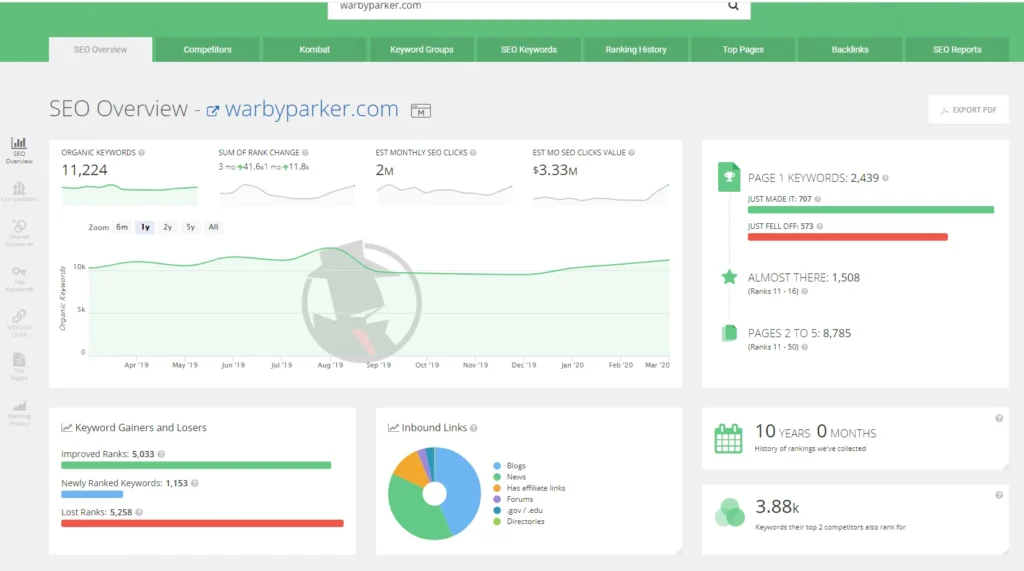
The PPC research reports make it easy to spot patterns in messaging and positioning without manually reviewing search results for hours.
On the SEO side, the keyword and domain comparison features help identify gaps and overlap between competing sites.
The interface is straightforward, which makes it easy to extract insights quickly rather than getting lost in data.
What we like
SpyFu stands out for its historical PPC data.
Unlike many tools that only show current snapshots, SpyFu lets you see how competitors’ ad strategies have changed over time, which makes it especially useful for identifying long-term patterns and validated keywords.
Conversion rate optimization tools
Conversion rate optimization tools help businesses improve the percentage of visitors who take desired actions on a website.
They provide behavioral insights, A/B testing capabilities, and user feedback mechanisms. Teams use them to systematically increase conversions without increasing traffic.
16. VWO
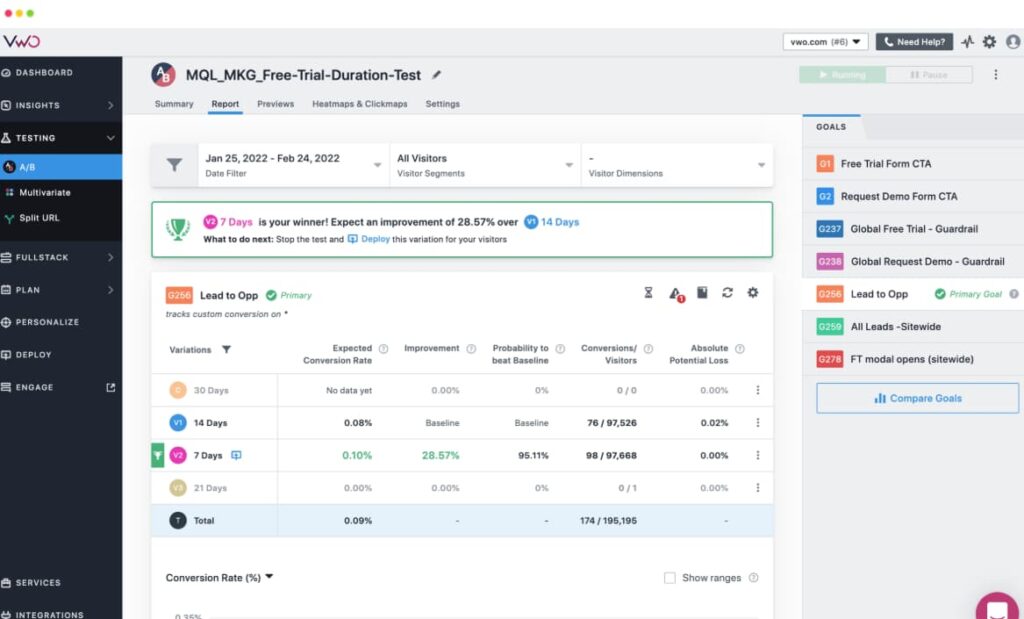
VWO is an experimentation platform we’ve found particularly useful when running structured A/B tests on landing pages and key conversion paths.
The visual editor makes it possible to create variations without heavy development work, which speeds up testing cycles.
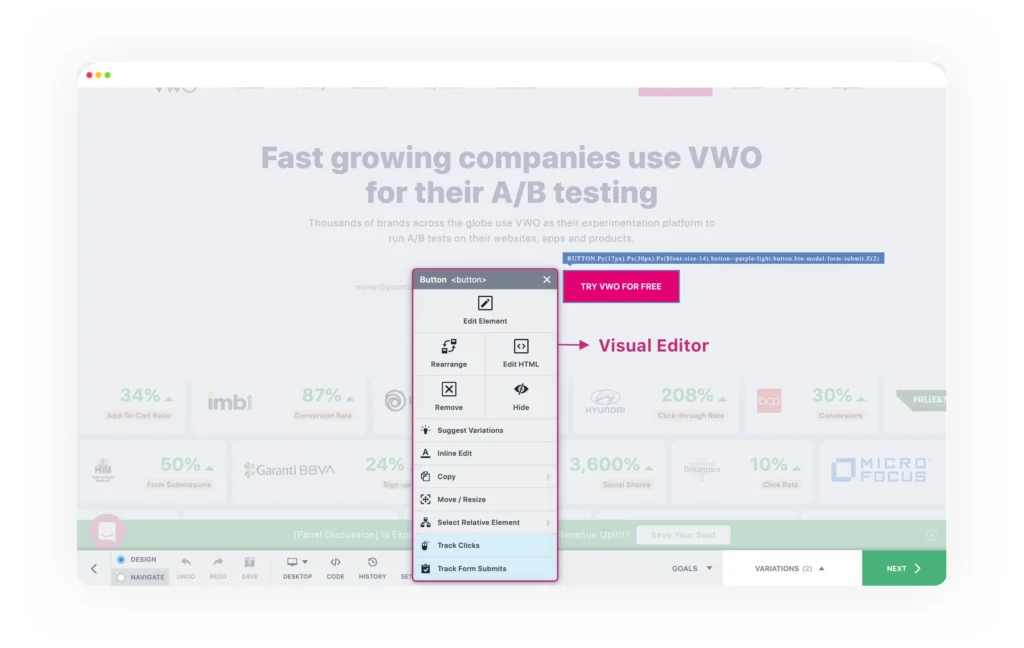
It supports both simple split tests and more advanced multivariate experiments, depending on how granular you want to get.
Beyond testing, the behavioral insights tools help identify friction points before launching experiments. The reporting interface makes it relatively easy to interpret results without needing a data analyst.
What we like
VWO stands out because it combines experimentation and behavioral insights in one platform.
Instead of stitching together separate tools for heatmaps and testing, VWO brings those workflows together, which makes it easier to move from insight to experiment to decision.
17. Hotjar
Hotjar is a behavioral analytics tool we’ve used primarily to understand how users actually interact with a page.
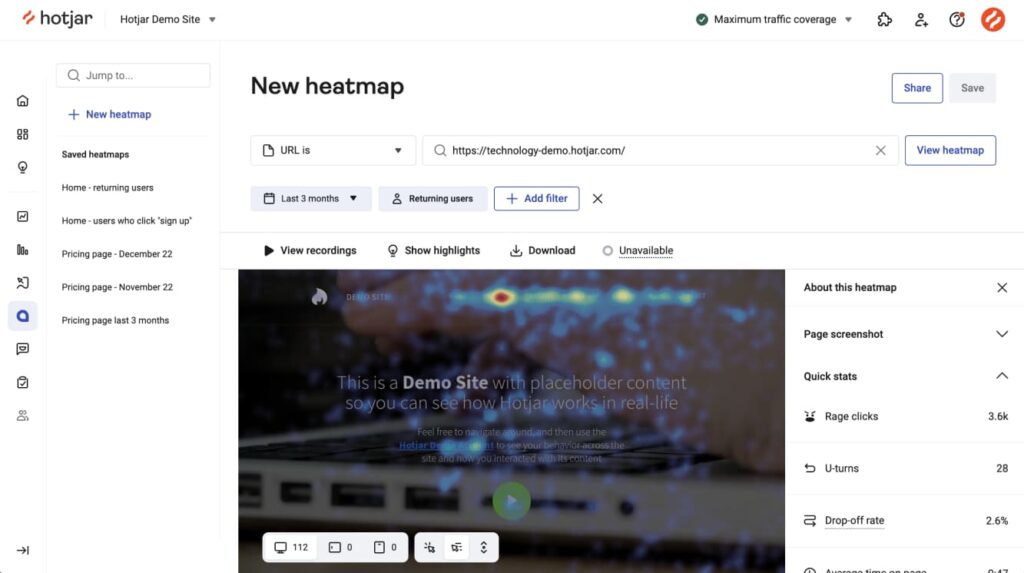
The heatmaps quickly show where people click, scroll, and drop off, which helps identify friction points without digging through analytics reports.
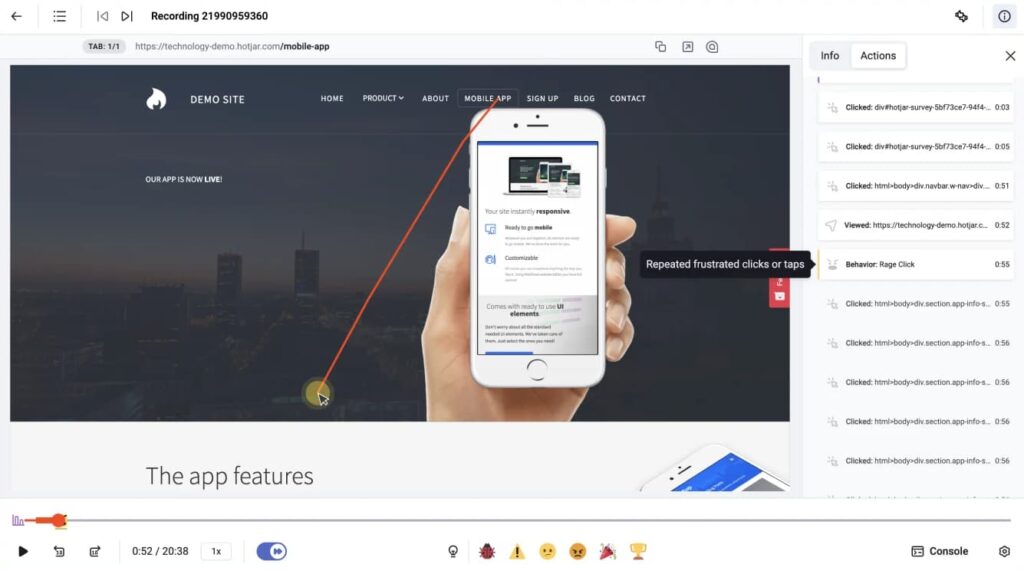
Session recordings are especially useful when diagnosing why a form isn’t converting or where users hesitate.
The on-site surveys and feedback widgets also make it easy to collect qualitative insights directly from visitors. It’s typically one of the first tools we install when trying to understand usability issues.
What we like
Hotjar stands out for how visual and intuitive it is.
Compared to traditional analytics platforms that focus on numbers, Hotjar makes user behavior tangible, which makes it much easier to spot usability problems quickly and align teams around what needs fixing.
Marketing automation tools
Marketing automation tools enable businesses to build structured, behavior-driven workflows across email and other channels.
They support lead nurturing, scoring, segmentation, and multi-step campaign logic. These platforms are especially valuable for longer sales cycles and B2B marketing.
18. HubSpot Marketing Hub
HubSpot Marketing Hub combines email marketing, landing pages, automation, and CRM data inside one system, which helps reduce tool fragmentation.
When implementing it for B2B teams, we’ve seen how much smoother lifecycle marketing becomes once contacts, deals, and campaign data live in the same ecosystem.
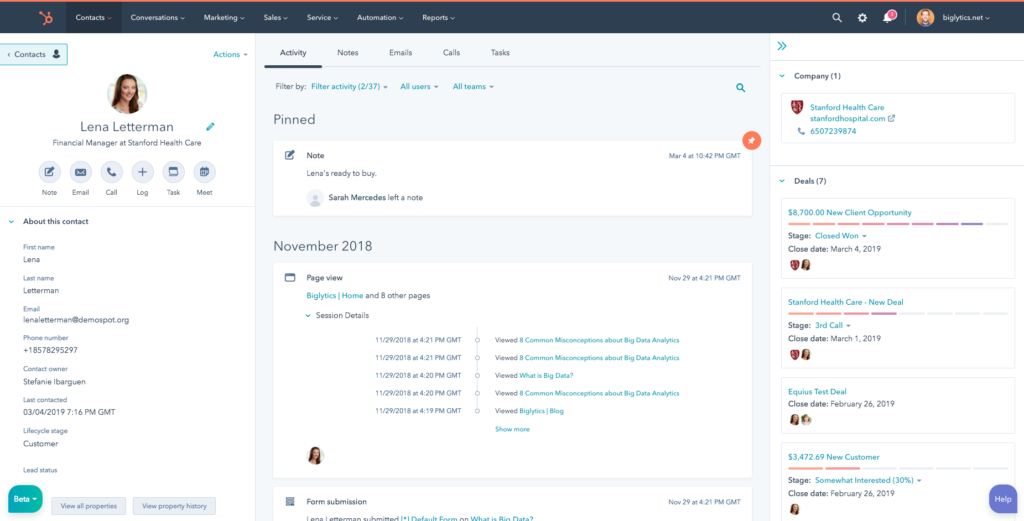
The visual workflow builder makes it possible to map out complex nurturing sequences tied to lifecycle stages and behavioral triggers.
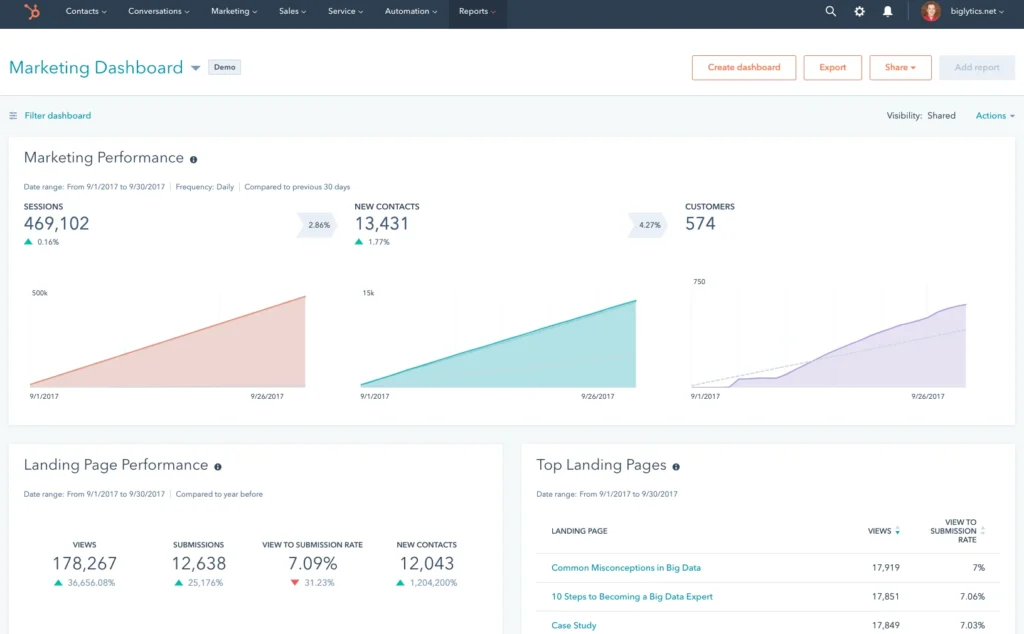
The contact timeline is particularly useful when sales needs context on what content a prospect engaged with before a call. Lead scoring and reporting can be configured to reflect real buying intent, not just surface-level engagement metrics.
What we like
What makes HubSpot different is how tightly marketing automation connects to its native CRM.
In practice, this removes the friction of syncing systems and makes attribution, reporting, and marketing-to-sales handoffs far cleaner than tools that rely on third-party integrations.
19. Marketo Engage
Marketo Engage is built for organizations running complex, multi-touch B2B marketing programs.
In projects where longer sales cycles and multiple stakeholders were involved, we’ve seen how its segmentation and automation capabilities handle complexity that lighter tools struggle with.
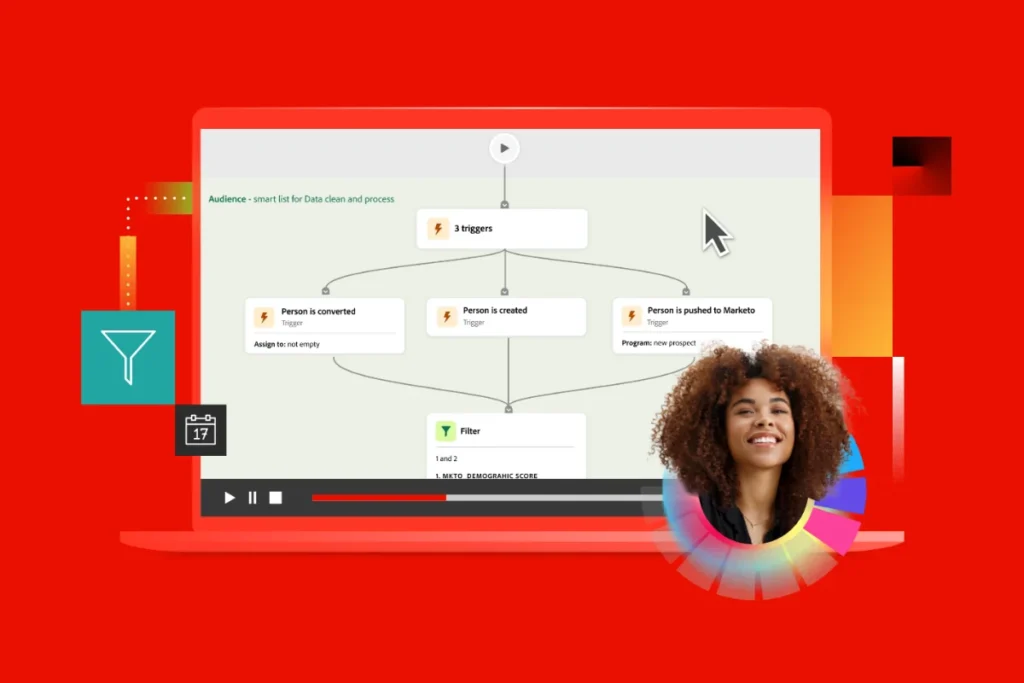
The platform supports advanced lead scoring models, detailed behavioral triggers, and multi-channel campaign orchestration.
Its integration with enterprise CRMs allows marketing and sales teams to operate from shared data without oversimplifying workflows.
Reporting can be configured to reflect influence across the full buyer journey rather than just first- or last-touch attribution.
What we like
Marketo stands out for handling scale and complexity without breaking under it.
Compared to mid-market automation tools, it’s better suited for enterprise teams that need granular segmentation, layered scoring models, and highly customized nurturing across long sales cycles.
SMS & conversational marketing tools
SMS and conversational marketing tools allow businesses to communicate directly with customers through text messaging and chat.
They support automation, personalization, and real-time engagement. These tools are often used to reduce friction and increase response speed.
20. TextNinja
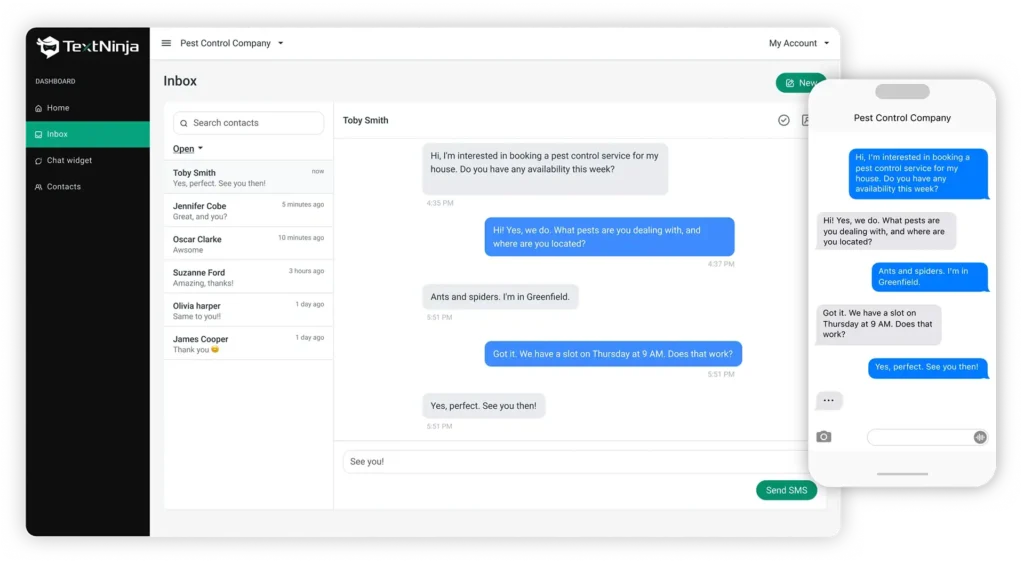
TextNinja is a web-to-text widget aimed at helping local service businesses convert more website visits into conversations.
By adding a short snippet of code to their site, businesses can let visitors start two-way conversations instantly.
TextNinja also offers a shared inbox, which team members can use to manage customer conversations in one place.
What we like
TextNinja includes an autoresponder feature, allowing you to set up automated replies to inquiries and ensure every lead gets a response straight away.
Ready to grow your business?
Capture leads, engage customers instantly, and turn conversations into sales with TextNinja's powerful SMS chat widget.
Start free trial
21. Attentive
Attentive is built specifically for ecommerce brands that want to treat SMS as a revenue channel rather than just a notification tool.
In campaigns where SMS was tied directly to product launches and abandoned cart flows, we’ve seen how quickly it can drive measurable engagement compared to email alone.
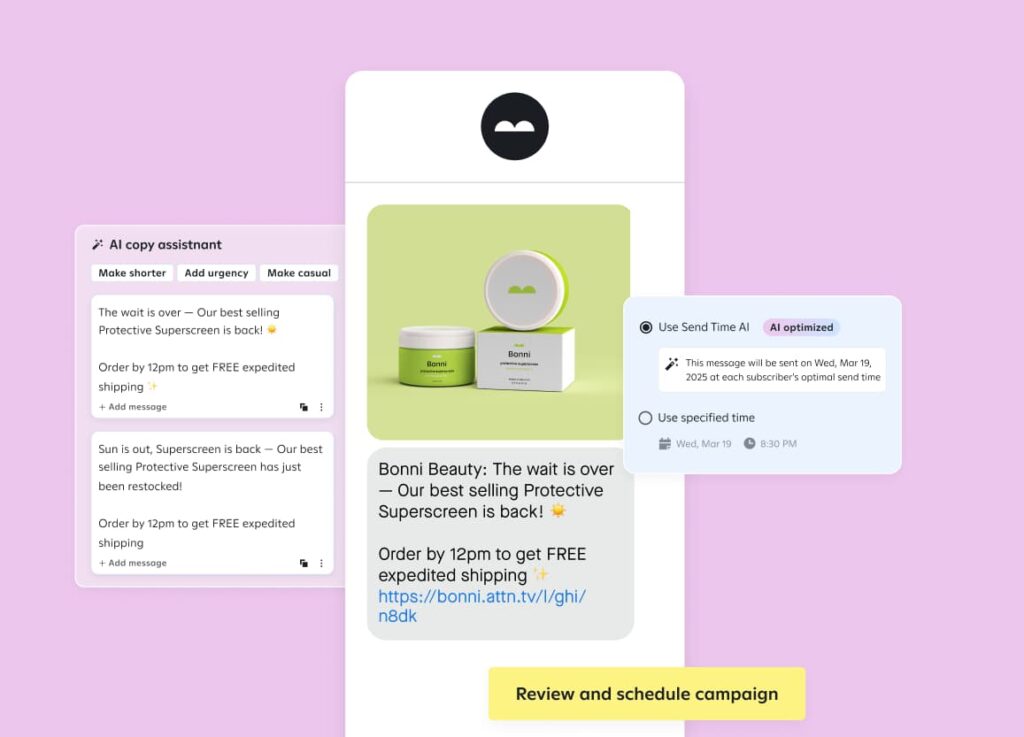
The platform makes it easy to segment subscribers based on browsing behavior, purchase history, and engagement patterns.
Automated flows like cart recovery, back-in-stock alerts, and post-purchase upsells are straightforward to configure. Its compliance tools and opt-in management also help reduce risk when scaling SMS programs.
What we like
Attentive stands out for how tightly SMS is connected to ecommerce data.
Unlike more general messaging platforms, it’s designed specifically for revenue-focused SMS campaigns, which makes it especially effective for brands looking to maximize revenue through automation.
Marketing analytics & reporting tools
Marketing analytics and reporting tools consolidate performance data across channels into dashboards and reports.
They help teams track KPIs, measure attribution, and identify growth opportunities. These platforms reduce reliance on manual reporting and spreadsheet workflows.
22. Google Analytics 4
Google Analytics 4 (GA4) uses an event-based tracking model that provides more flexible measurement than traditional session-based analytics.
During migrations from Universal Analytics, we worked directly with GA4’s event setup and saw how much more customizable tracking becomes once events and parameters are configured properly.
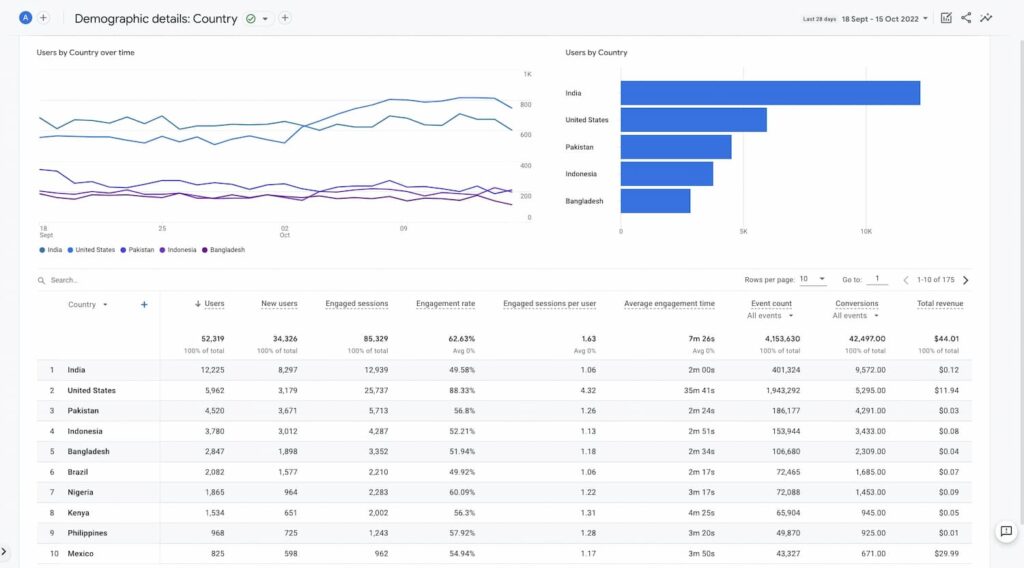
It allows you to track user journeys across devices, monitor engagement metrics, and define conversion events tied to specific business goals.
The integration with Google Ads makes it easier to build audiences and measure campaign performance inside the same ecosystem. Explorations and custom reports provide deeper analysis when standard reports aren’t enough.
What we like
GA4 stands out because of its event-driven data model.
Compared to older analytics systems, it gives significantly more flexibility in defining what matters to your business, making it better suited for teams that want custom tracking rather than relying solely on default reports.
23. Databox
Databox is a reporting platform designed to centralize data from multiple marketing tools into one dashboard.
When consolidating data from SEO, PPC, email, and CRM systems, we’ve used Databox to eliminate the need for manually pulling numbers into spreadsheets.
The dashboard builder allows you to create visual KPI reports tailored to different stakeholders, whether that’s a CMO view or a channel-specific breakdown.
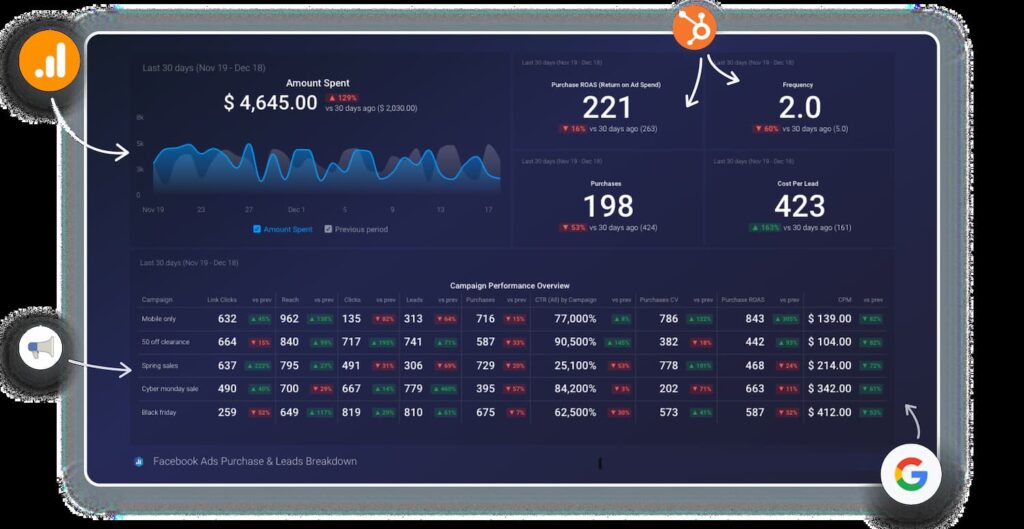
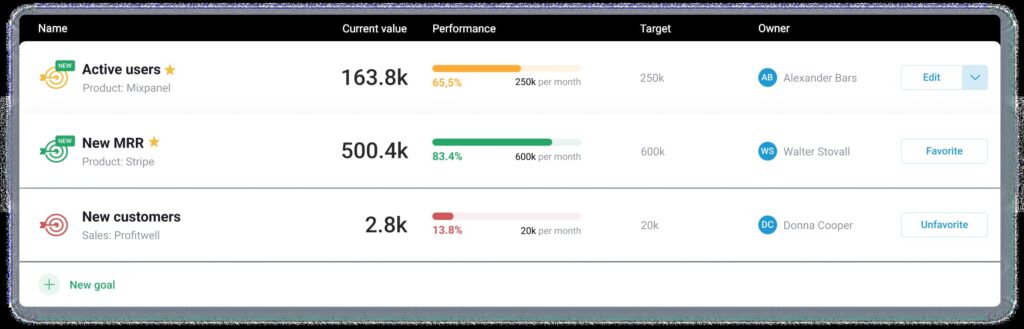
It supports goal tracking, which helps teams measure performance against predefined targets rather than just reporting raw metrics.
Automated updates and scheduled reports make it easier to keep everyone aligned without recurring manual work.
What we like
Databox stands out for how quickly you can turn scattered data into clean, stakeholder-ready dashboards.
Compared to more complex BI tools, it strikes a balance between flexibility and usability, making it especially practical for marketing teams that want better reporting without building a full analytics stack.
Choose the right digital marketing tools for your business
The best digital marketing tool is the one that fits your workflow, team structure, and growth stage. Some platforms are built for simplicity and speed, while others are designed for scale and complexity.
Before committing, define what problem you’re actually trying to solve. Whether it’s improving SEO visibility, increasing conversions, automating lifecycle campaigns, or consolidating reporting, clarity on your goal will narrow your options quickly.
Used well, the right tool will make marketing easier, more measurable, and more efficient.